
Total Knee Replacement Surgery in Jaipur
Advanced Total Knee Arthroplasty by Dr. Hemendra Agrawal
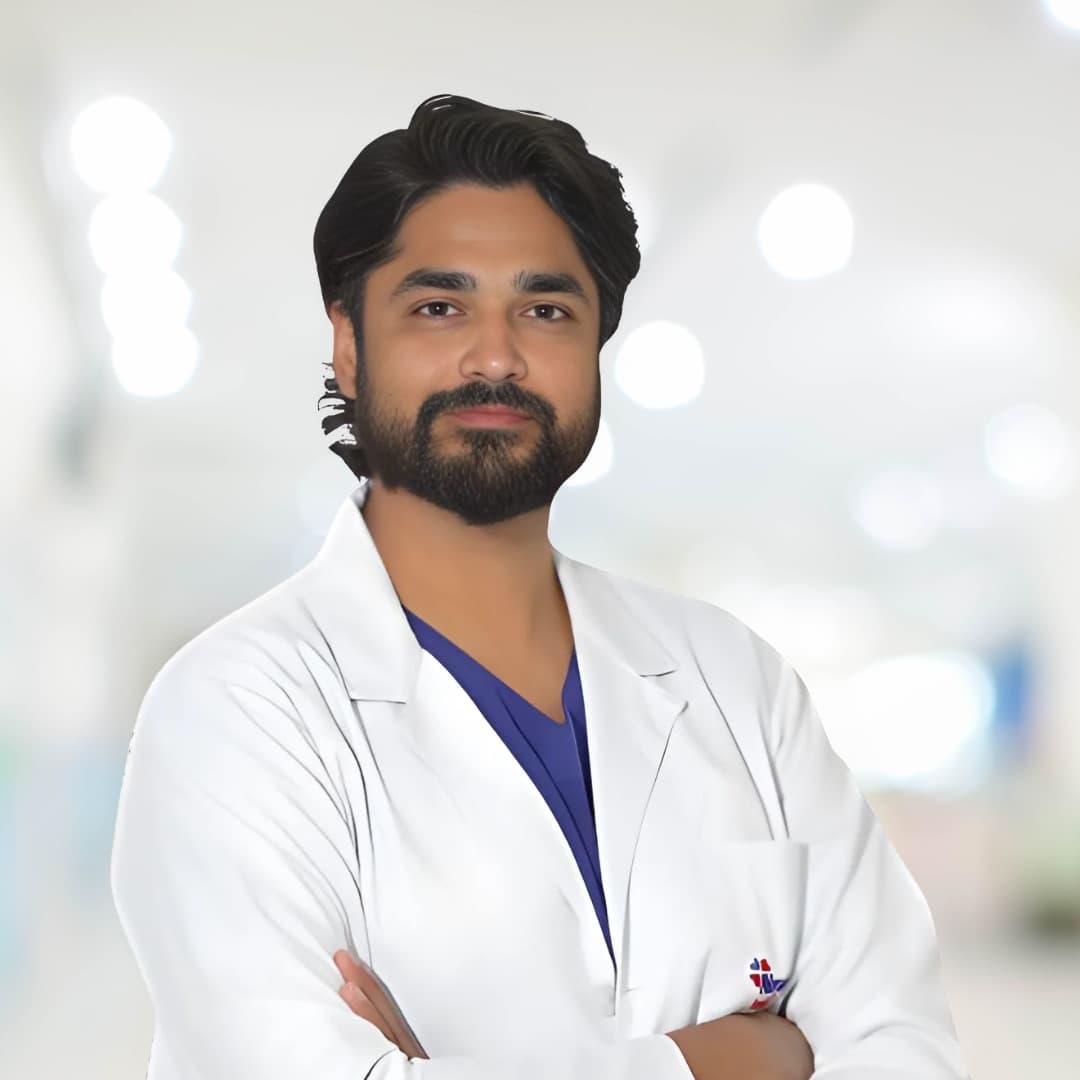
Dr. Hemendra Agrawal
MBBS, MS (Orthopedics) · Senior Orthopedic Consultant, Narayana Hospital
Overview
What is Total Knee Replacement (TKR)?
Total Knee Replacement (TKR), also known as Total Knee Arthroplasty (TKA), is a transformative surgical procedure that replaces all three compartments of the damaged knee joint: the medial (inner), lateral (outer), and patellofemoral (front) compartments, with precision-engineered artificial implants. These prosthetic components are made from advanced biocompatible materials including cobalt-chromium alloy for the femoral component, titanium for the tibial base plate, and ultra-high molecular weight polyethylene for the bearing surface.
The knee joint is the largest and one of the most complex joints in the human body, formed by the junction of three bones: the femur (thigh bone), tibia (shin bone), and patella (kneecap). In a healthy knee, the surfaces of these bones are covered with smooth articular cartilage that allows nearly frictionless movement. When this cartilage is damaged by arthritis, injury, or disease, the bones begin to grind against each other, causing severe pain, inflammation, stiffness, and progressive deformity.
Dr. Hemendra Agrawal performs total knee replacement using state-of-the-art computer-navigated and robotic-assisted techniques that ensure implant positioning accuracy within 1 degree of the optimal alignment. This precision translates to better joint function, faster recovery, less post-operative pain, and significantly longer implant survival, often exceeding 25 years with modern implant designs.
The procedure is typically performed under regional anesthesia (spinal or epidural) combined with peripheral nerve blocks for superior pain control. Dr. Agrawal's minimally invasive approach uses smaller incisions and muscle-sparing techniques, preserving the quadriceps mechanism for faster rehabilitation and a more natural-feeling knee.
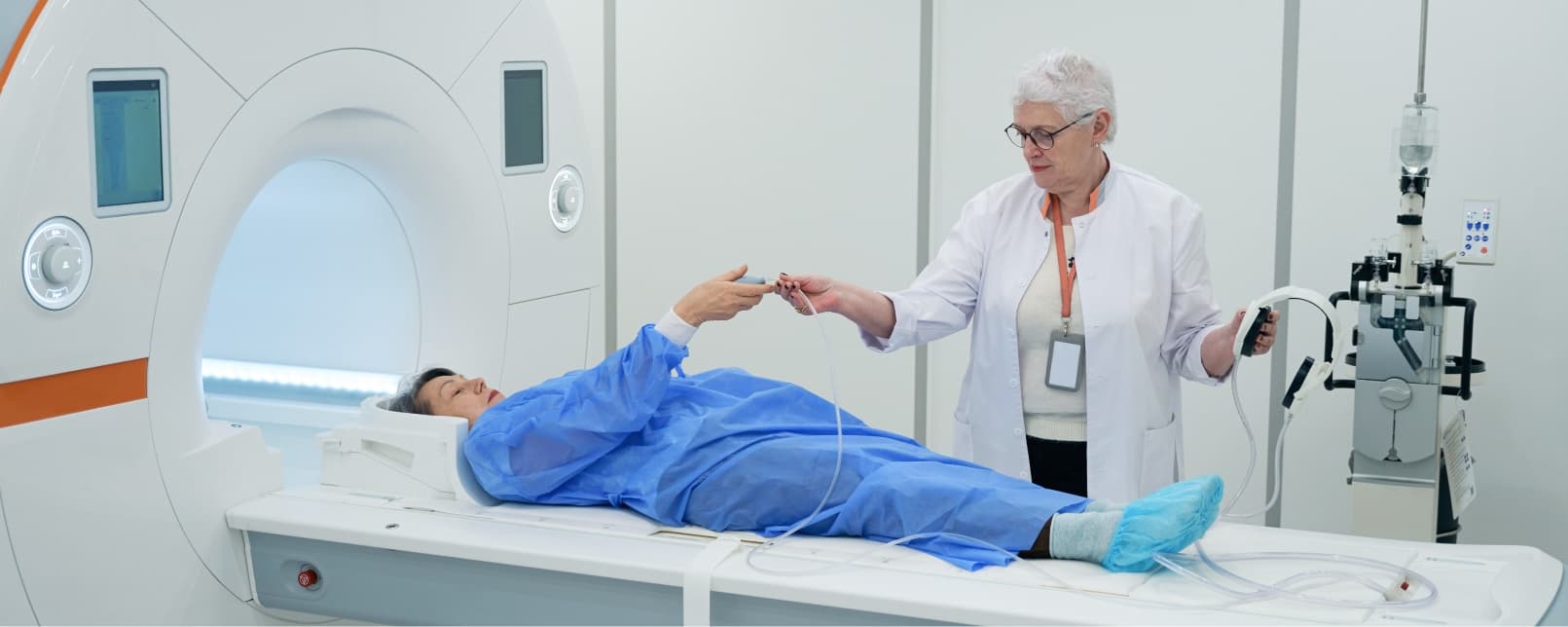
Precise diagnosis using advanced imaging & evaluation
20,000+
Successful Surgeries
When It's Needed
Conditions & Indications
When is this procedure recommended? These are the conditions where Total Knee Replacement Surgery typically offers the best outcome.
Experiencing these symptoms?
An accurate diagnosis is the first step. Get an expert evaluation from Dr. Hemendra Agrawal.
Book a ConsultationSevere osteoarthritis with bone-on-bone contact and significant joint space narrowing on X-ray
Advanced rheumatoid arthritis with progressive cartilage destruction despite medical management
Post-traumatic arthritis following fractures, ligament injuries, or meniscal damage
Avascular necrosis (osteonecrosis) of the femoral condyles or tibial plateau
Severe knee deformity: varus (bow-leg) or valgus (knock-knee), causing functional impairment
Failed previous knee surgeries including arthroscopy, osteotomy, or partial replacement
Crystal arthropathy (chronic gout or pseudogout) with irreversible joint destruction
Hemophilic arthropathy causing progressive joint deterioration
Step by Step
How is Total Knee Replacement Performed?
A detailed walkthrough of the surgical process
Step 01 / 07
Pre-Operative Assessment & Planning
Comprehensive evaluation including standing full-leg X-rays, MRI, blood investigations (CBC, ESR, CRP, blood sugar, renal and liver function, coagulation profile), ECG, 2D echocardiography, and pulmonary function tests. A 3D CT scan may be obtained for robotic-assisted surgery planning. Medical fitness clearance is obtained from cardiologist and anesthesiologist. Pre-operative physiotherapy (prehabilitation) begins 2-4 weeks before surgery to strengthen muscles and improve cardiovascular fitness.
Step 02 / 07
Anesthesia & Patient Positioning
Regional anesthesia (spinal or combined spinal-epidural) is administered, providing complete pain-free surgery without the risks of general anesthesia. An adductor canal nerve block is given for extended post-operative pain relief lasting 12-24 hours. The patient is positioned supine with the knee flexed at 90 degrees. A pneumatic tourniquet is applied to the upper thigh to create a bloodless surgical field for optimal visibility.
Step 03 / 07
Surgical Approach & Exposure
A midline skin incision (12-15 cm) is made over the front of the knee. Using a medial parapatellar or subvastus approach, the joint is exposed while preserving as much soft tissue as possible. The patella is everted to reveal the arthritic joint surfaces. The cruciate ligaments, menisci, and osteophytes (bone spurs) are removed as needed. Computer navigation trackers are fixed to the femur and tibia.
Step 04 / 07
Bone Preparation with Computer Navigation
Using the computer navigation system, precise bone cuts are planned and executed. The distal femur is cut first with a cutting block aligned to the mechanical axis. Five cuts are made on the femur to shape it for the femoral component. The proximal tibia is cut perpendicular to its mechanical axis with a precise posterior slope. The patella may be resurfaced by removing a thin layer of bone. All cuts are verified digitally for accuracy within 1 degree.
Step 05 / 07
Trial Component Fitting
Trial implant components are placed to assess joint alignment, stability, range of motion, ligament balance, and patellar tracking. The computer navigation system verifies the limb alignment in full extension and flexion. Any necessary soft tissue releases or bone adjustments are made to achieve optimal balance. The trial components are tested through a full range of motion to ensure smooth, stable articulation.
Step 06 / 07
Final Implant Cementation
Once satisfied with the trial fitting, the actual prosthetic components are cemented in place using polymethylmethacrylate (PMMA) bone cement. The femoral component (cobalt-chromium), tibial base plate (titanium) with polyethylene insert, and patellar button (if resurfaced) are precisely positioned. Excess cement is meticulously removed. The joint is irrigated with antiseptic solution.
Step 07 / 07
Closure & Post-Operative Protocol
The joint capsule, subcutaneous tissue, and skin are closed in layers. A compression dressing and cold therapy cuff are applied. The patient is transferred to the recovery room where vital signs are monitored. Multimodal pain management begins immediately. Mechanical DVT prophylaxis (compression stockings and sequential compression devices) and anticoagulation therapy are initiated to prevent blood clots.
Facilities & Care
Advanced Surgery & Personalized Care
From a state-of-the-art operation theatre to attentive post-operative recovery: you're in expert hands at every step.
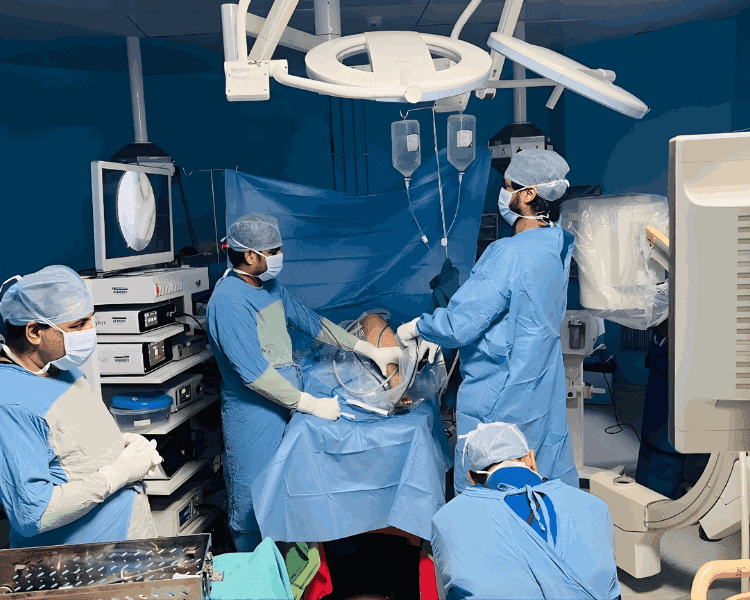
Modern Operation Theatre
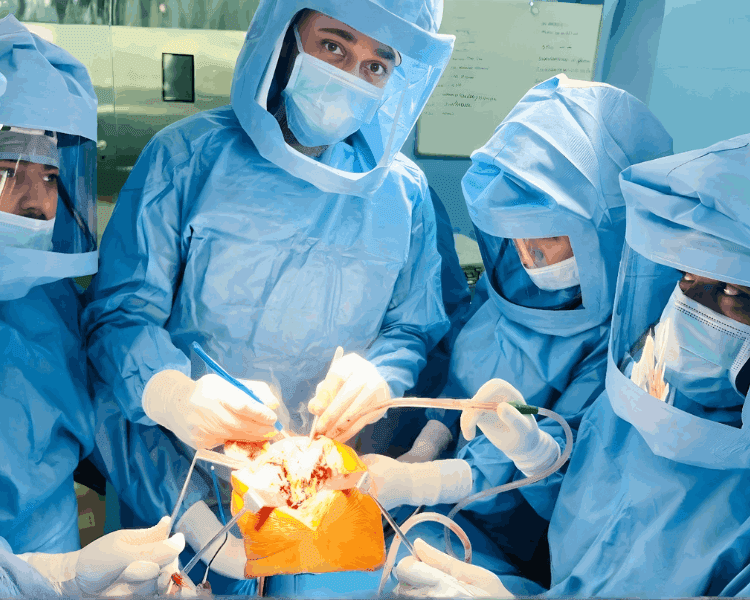
Precision Surgery in Progress
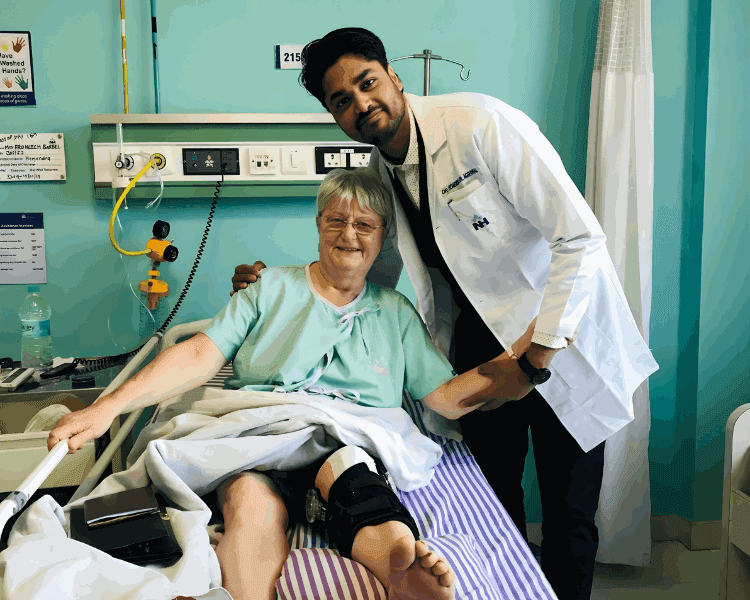
Attentive Post-Operative Care
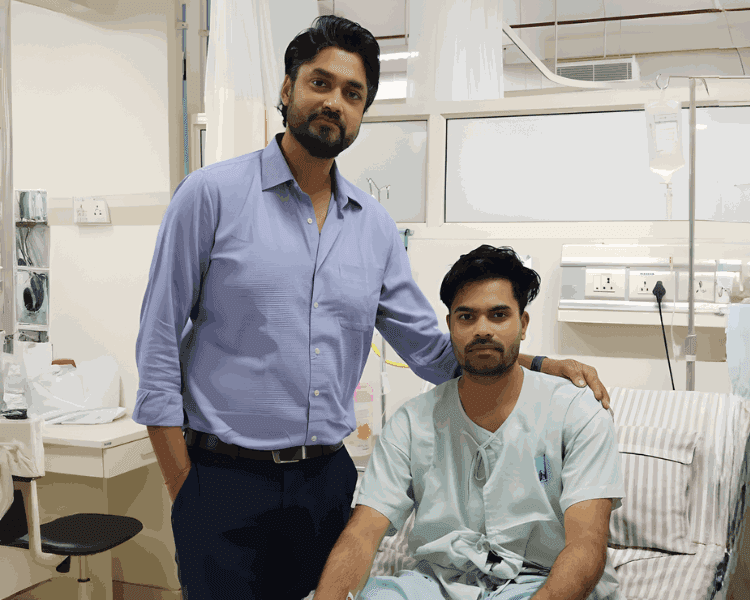
Personalized Patient Support
The Outcome
Key Benefits
How this procedure transforms your life
Complete elimination of arthritic knee pain: 95% of patients report significant or complete pain relief
Restoration of near-normal knee range of motion (typically 0-120 degrees of flexion)
Correction of limb alignment and deformity (varus/valgus correction)
Return to daily activities including walking, stair climbing, gardening, and light sports
Modern implants designed to last 25+ years with proper care and activity modification
Improved sleep quality: no more night pain or pain-related sleep disturbance
Reduced dependence on pain medications including NSAIDs and opioids
Enhanced psychological well-being and reduced depression associated with chronic pain
Your Journey
Recovery Timeline
What to expect during your recovery journey, step by step
Immediate Post-Op
Recovery room monitoring, pain management with nerve blocks and IV analgesics, first standing and walking with walker assistance within 12-24 hours, beginning of ankle pump exercises and quadriceps activation, continuous passive motion (CPM) machine initiated.
Hospital Rehabilitation
Progressive walking distance increase, stair climbing training, independent transfers from bed to chair, active range of motion exercises targeting 90 degrees flexion, wound assessment and dressing change, discharge planning and home exercise education.
Early Home Recovery
Walking with walker transitioning to cane by week 3-4, daily home exercise program (3 times daily), outpatient physiotherapy sessions 2-3 times per week, progressive strengthening exercises, wound healing and suture removal at 2 weeks, achieve 100+ degrees knee flexion by week 6.
Strengthening Phase
Walking without aids for most activities, return to driving (automatic transmission at 6 weeks, manual at 8 weeks), low-impact exercises, swimming, cycling, walking on even surfaces, return to desk work and light occupational activities, achieve 110-120 degrees flexion.
Full Activity Resumption
Return to most normal daily activities without restriction, low-impact recreational activities, golf, bowling, doubles tennis, cycling, progressive strength and endurance training, final follow-up assessment with X-rays at 6 months.
Long-Term Follow-Up
Annual follow-up with clinical examination and X-rays, continued activity modification, avoid high-impact sports (running, jumping, singles tennis), weight management to reduce implant stress, dental prophylaxis before dental procedures to prevent prosthetic joint infection.
Insurance & Panels
Insurance & Cashless Options for Knee Replacement
Government panels and health insurance we help you claim, with cashless coordination and complete paperwork support.
CGHS
For central government employees & pensioners
ECHS
For ex-servicemen (defence) & dependents
RGHS
For Rajasthan government employees & pensioners
Railway Panel
For railway employees & pensioners
Ayushman Bharat
Cashless cover up to ₹5 lakh per family / year
MAA / Chiranjeevi
Rajasthan cashless cover · via Jan Aadhaar
Cashless Insurance
Cashless orthopedic surgery via your health insurer
Explore More
Other Services
Explore our full range of related procedures




FAQ
Frequently Asked Questions
Get answers to common questions about this procedure
Ready to Take the First Step?
Book a consultation with Dr. Hemendra Agrawal to discuss your condition and explore the best treatment options for you.