
Shoulder Replacement Surgery in Jaipur
Total & Reverse Shoulder Arthroplasty by Dr. Hemendra Agrawal

Dr. Hemendra Agrawal
MBBS, MS (Orthopedics) · Senior Orthopedic Consultant, Narayana Hospital
Overview
What is Shoulder Replacement Surgery?
Shoulder Replacement Surgery, or Shoulder Arthroplasty, is a surgical procedure that replaces the damaged surfaces of the shoulder joint with artificial prosthetic components. The shoulder is the most mobile joint in the human body, a ball-and-socket joint where the humeral head (ball of the upper arm bone) articulates with the glenoid (shallow socket of the shoulder blade). This extraordinary range of motion makes the shoulder vulnerable to arthritis, rotator cuff disease, and fractures that can severely impact function.
Dr. Hemendra Agrawal performs three types of shoulder replacement: Anatomic Total Shoulder Replacement (TSA) for patients with intact rotator cuffs, Reverse Total Shoulder Replacement (RTSA) for patients with rotator cuff deficiency or complex fractures, and Hemiarthroplasty (replacing only the ball) for select fracture cases. The choice of procedure depends on the patient's underlying diagnosis, rotator cuff integrity, bone quality, and functional goals.
Reverse Total Shoulder Replacement represents one of the most significant advances in shoulder surgery over the past two decades. By reversing the normal anatomy, placing the ball on the socket side and the socket on the ball side, this innovative design allows the deltoid muscle to compensate for a deficient rotator cuff, enabling patients to raise their arm overhead and perform daily activities that were previously impossible.
With modern surgical techniques, advanced implant designs, and structured rehabilitation protocols, shoulder replacement surgery provides predictable and lasting pain relief with significant functional improvement. Dr. Agrawal's comprehensive approach, from accurate diagnosis through personalized rehabilitation, ensures optimal outcomes for every shoulder patient.
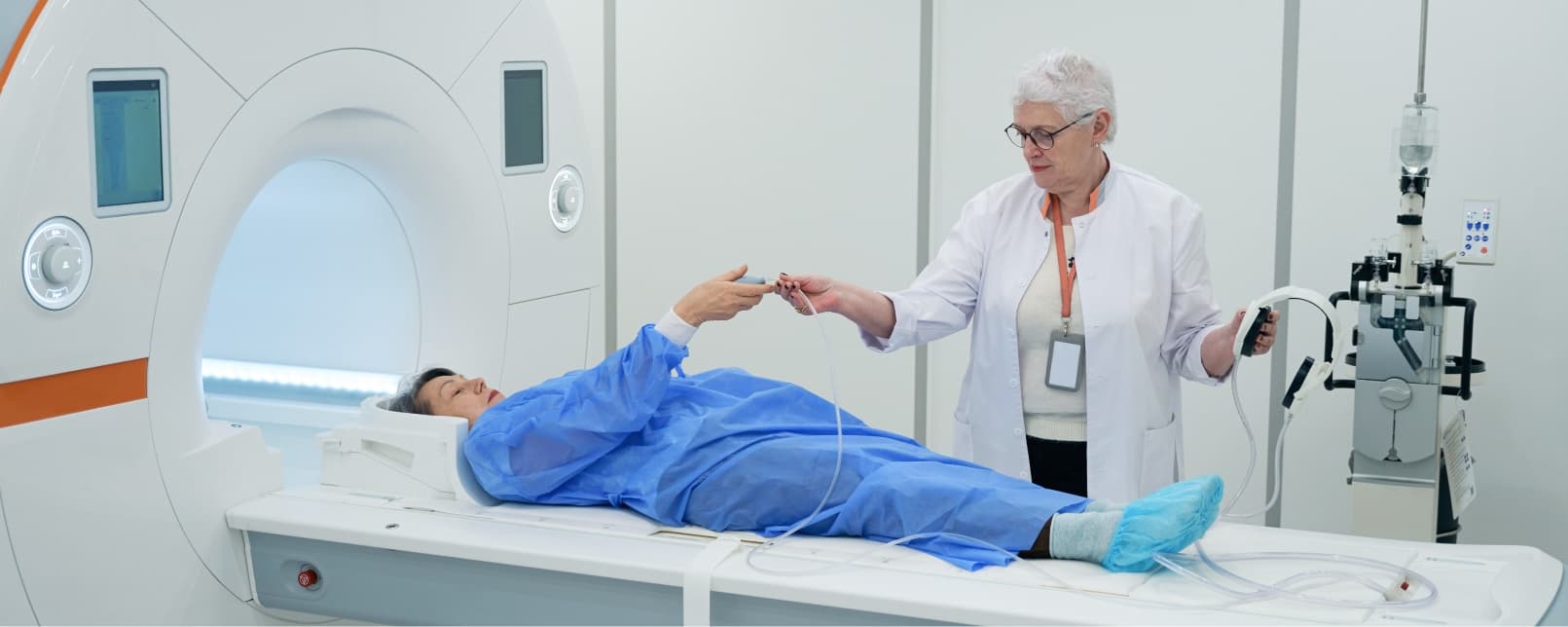
Precise diagnosis using advanced imaging & evaluation
20,000+
Successful Surgeries
When It's Needed
Conditions & Indications
When is this procedure recommended? These are the conditions where Shoulder Replacement Surgery typically offers the best outcome.
Experiencing these symptoms?
An accurate diagnosis is the first step. Get an expert evaluation from Dr. Hemendra Agrawal.
Book a ConsultationGlenohumeral osteoarthritis: progressive cartilage loss in the shoulder joint with bone-on-bone contact
Rotator cuff tear arthropathy: combination of massive rotator cuff tear and secondary arthritis (indication for reverse TSA)
Rheumatoid arthritis of the shoulder: autoimmune joint destruction with pain and progressive stiffness
Complex proximal humerus fractures: 3-part and 4-part fractures in elderly patients where fixation is not feasible
Avascular necrosis of the humeral head: bone death due to disrupted blood supply
Post-traumatic arthritis: following shoulder fractures, dislocations, or previous surgery
Failed previous shoulder surgery: rotator cuff repair failure, failed fracture fixation, or prior arthroplasty
Chronic shoulder dislocation with arthritis: irreducible dislocation with joint surface damage
Step by Step
How is Shoulder Replacement Surgery Performed?
A detailed walkthrough of the surgical process
Step 01 / 05
Pre-Operative Assessment
Comprehensive shoulder examination, X-rays (AP in internal and external rotation, axillary, scapular Y views), CT scan with 3D reconstruction for surgical planning and glenoid assessment, MRI to evaluate rotator cuff integrity and muscle quality. Templating and pre-operative planning using patient-specific guides if available.
Step 02 / 05
Surgical Approach: Deltopectoral
A 12-15 cm incision is made over the front of the shoulder following the deltopectoral groove. The deltoid and pectoralis major muscles are separated (no muscles are cut). The subscapularis tendon is managed with tenotomy or lesser tuberosity osteotomy for access to the joint.
Step 03 / 05
Humeral Head Replacement
The arthritic humeral head is removed with an oscillating saw at the anatomic neck. The humeral canal is prepared with progressive broaches. A trial humeral stem is placed to assess height, version (rotation), and offset. For anatomic TSA, a humeral head matching the patient's anatomy is selected. For reverse TSA, a humeral socket (glenosphere tray) is placed on the humeral side.
Step 04 / 05
Glenoid Preparation & Implantation
For anatomic TSA: The glenoid is prepared by removing cartilage and shaping the bone. A polyethylene glenoid component is cemented in place. For reverse TSA: A metal baseplate is secured to the glenoid with screws, and a metal glenosphere (ball) is attached to the baseplate. This reverses the normal ball-and-socket relationship, converting the shoulder mechanics to be deltoid-powered.
Step 05 / 05
Assembly, Reduction & Closure
The final humeral and glenoid components are assembled, the joint is reduced, and stability is tested through a full range of motion. The subscapularis is repaired (for anatomic TSA) or left open (for some reverse TSA designs). The wound is closed in layers, and a sling is applied.
Facilities & Care
Advanced Surgery & Personalized Care
From a state-of-the-art operation theatre to attentive post-operative recovery: you're in expert hands at every step.
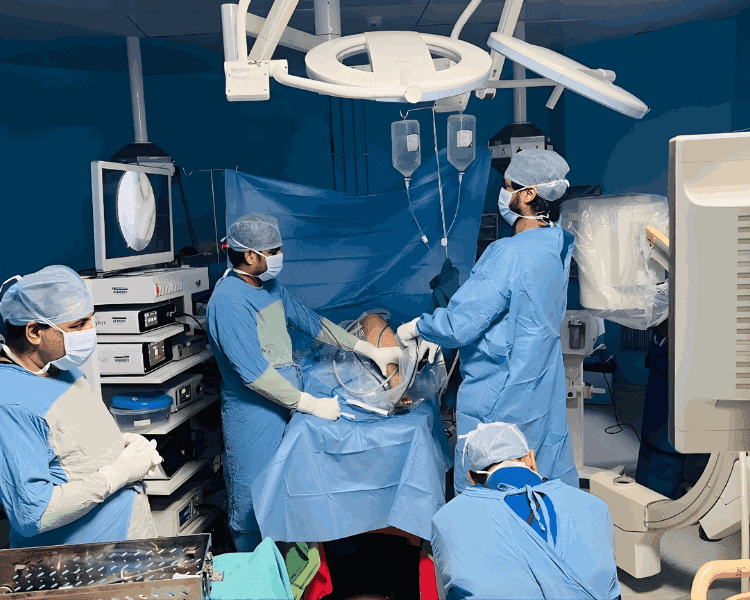
Modern Operation Theatre
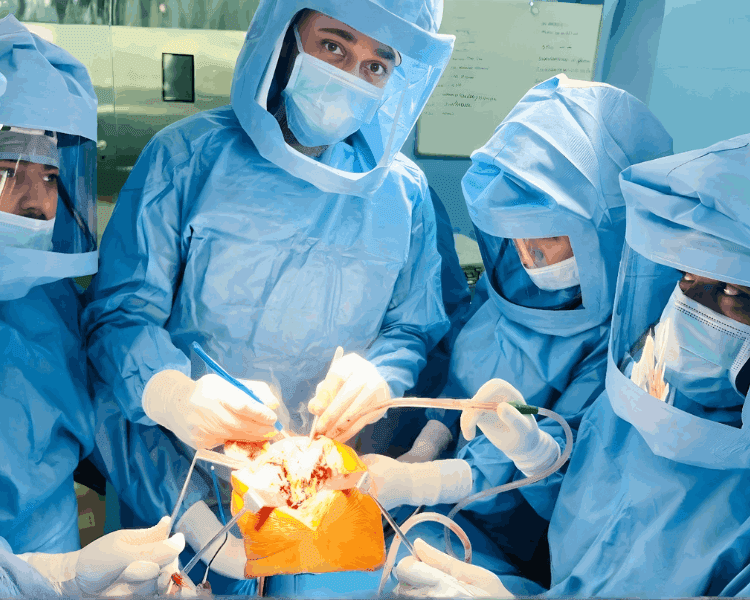
Precision Surgery in Progress
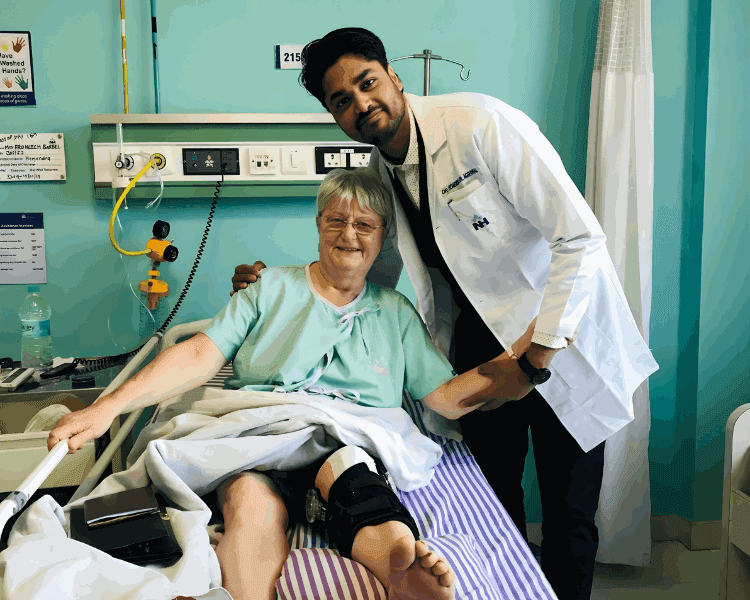
Attentive Post-Operative Care
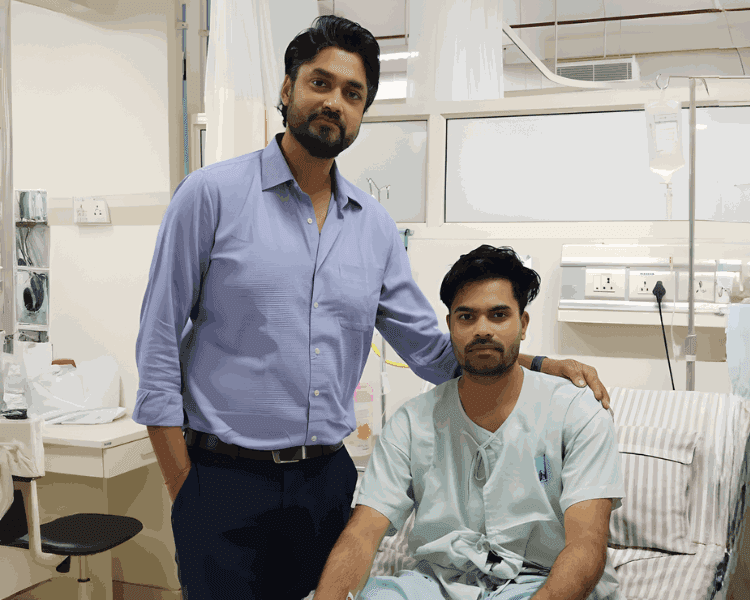
Personalized Patient Support
The Outcome
Key Benefits
How this procedure transforms your life
Significant pain relief: 95% of patients experience substantial pain reduction
Improved range of motion: enabling overhead activities, reaching behind the back, and grooming
Restored shoulder function for daily activities, dressing, eating, bathing, and reaching
Reverse TSA allows arm elevation even without a functioning rotator cuff
Modern implant survival exceeding 90% at 10-15 years for anatomic TSA and 93% at 10 years for reverse TSA
Improved sleep: elimination of night pain that prevents restful sleep
Enhanced quality of life and independence in self-care activities
Alternative to living with chronic pain and progressive disability
Your Journey
Recovery Timeline
What to expect during your recovery journey, step by step
Immobilization Phase
Arm in sling for support and comfort. Gentle pendulum exercises and elbow/wrist/hand movements only. Ice therapy for swelling. Wound care and suture removal at 2 weeks.
Passive Motion Phase
Physiotherapist-guided passive range of motion exercises. Sling continued between exercises. Gentle passive forward elevation, external rotation. No active lifting.
Active Motion Phase
Sling discontinued. Active-assisted progressing to active range of motion. Light isometric strengthening. Return to desk work and driving. Gradually increasing daily activities.
Strengthening Phase
Progressive strengthening of shoulder muscles: deltoid, rotator cuff (if intact), periscapular muscles. Resistance band exercises. Light recreational activities.
Full Recovery
Maximum recovery achieved by 12-18 months. Return to low-impact activities. Avoid heavy lifting (>10 kg overhead), contact sports, and high-impact shoulder activities. Annual follow-up with X-rays.
Insurance & Panels
Insurance & Cashless Options for Shoulder Replacement
Government panels and health insurance we help you claim, with cashless coordination and complete paperwork support.
CGHS
For central government employees & pensioners
ECHS
For ex-servicemen (defence) & dependents
RGHS
For Rajasthan government employees & pensioners
Railway Panel
For railway employees & pensioners
Ayushman Bharat
Cashless cover up to ₹5 lakh per family / year
MAA / Chiranjeevi
Rajasthan cashless cover · via Jan Aadhaar
Cashless Insurance
Cashless orthopedic surgery via your health insurer
Explore More
Other Services
Explore our full range of related procedures





FAQ
Frequently Asked Questions
Get answers to common questions about this procedure
Ready to Take the First Step?
Book a consultation with Dr. Hemendra Agrawal to discuss your condition and explore the best treatment options for you.