
Elbow Replacement Surgery in Jaipur
Total Elbow Arthroplasty by Dr. Hemendra Agrawal

Dr. Hemendra Agrawal
MBBS, MS (Orthopedics) · Senior Orthopedic Consultant, Narayana Hospital
Overview
What is Elbow Replacement Surgery?
Total Elbow Replacement (TER), also known as Total Elbow Arthroplasty (TEA), is a specialized surgical procedure that replaces the damaged elbow joint with an artificial prosthetic implant. The elbow is a complex hinge joint formed by the articulation of three bones: the humerus (upper arm bone), ulna (inner forearm bone), and radius (outer forearm bone). It allows two essential movements: flexion-extension (bending and straightening the arm) and pronation-supination (rotating the forearm to turn the palm up and down).
Elbow replacement is less commonly performed than knee or hip replacement, but it is an excellent solution for patients with severe elbow arthritis, complex elbow fractures (especially in elderly patients), or failed previous elbow surgeries. The procedure can dramatically reduce pain, restore functional range of motion, and improve the ability to perform daily activities that require arm use, eating, grooming, dressing, reaching, and lifting.
Dr. Hemendra Agrawal has specialized training in upper limb joint replacement and performs elbow replacement using linked (semiconstrained) and unlinked implant designs, selecting the optimal type based on the patient's bone quality, ligament integrity, and underlying diagnosis. The semiconstrained linked design provides inherent stability even in patients with ligament deficiency or bone loss.
Modern elbow implants have significantly improved outcomes compared to earlier designs. With proper patient selection, surgical technique, and adherence to post-operative activity guidelines (particularly the 5 kg lifting restriction for the replaced arm), total elbow replacement provides reliable pain relief and functional improvement with implant survival rates exceeding 85% at 10 years.
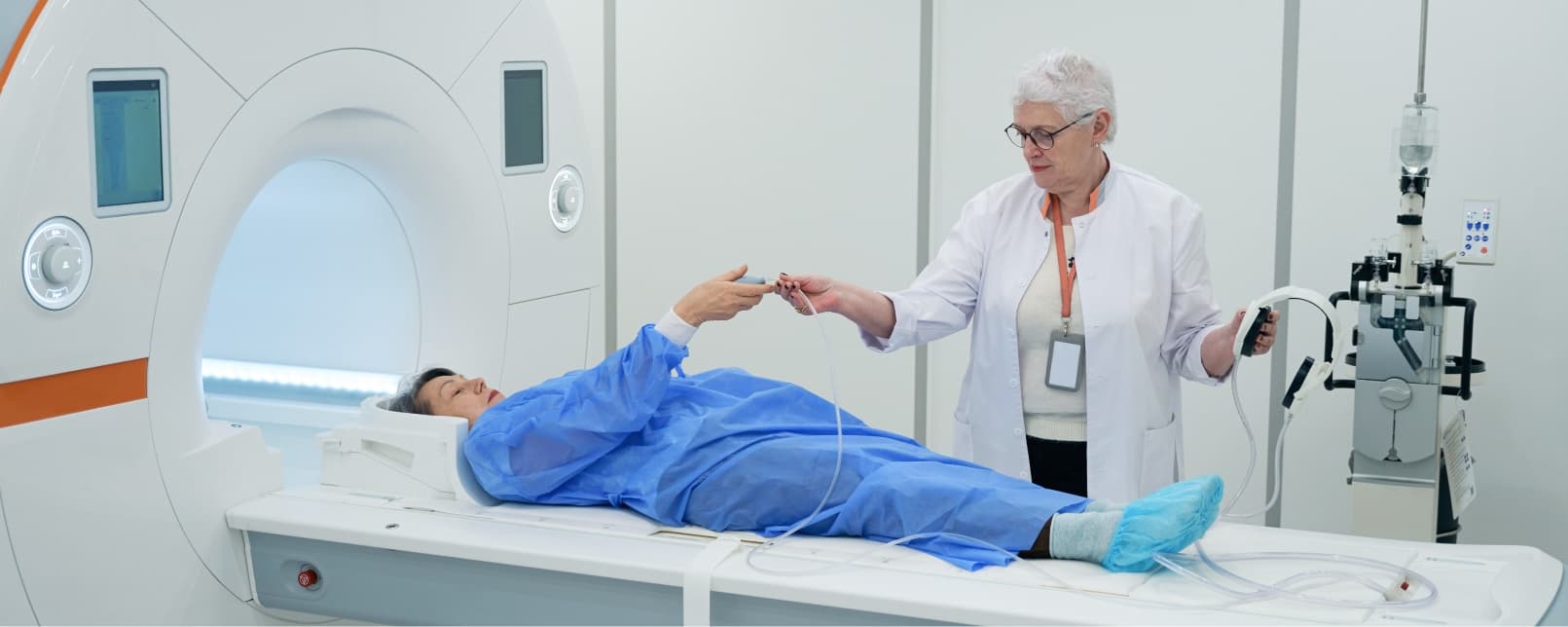
Precise diagnosis using advanced imaging & evaluation
20,000+
Successful Surgeries
When It's Needed
Conditions & Indications
When is this procedure recommended? These are the conditions where Elbow Replacement Surgery typically offers the best outcome.
Experiencing these symptoms?
An accurate diagnosis is the first step. Get an expert evaluation from Dr. Hemendra Agrawal.
Book a ConsultationRheumatoid arthritis: the most common indication for elbow replacement, causing severe joint destruction
Post-traumatic arthritis: following complex elbow fractures, dislocations, or failed fracture fixation
Complex distal humerus fractures in elderly patients, where fracture fixation is unlikely to succeed
Primary osteoarthritis of the elbow: less common but can cause significant stiffness and pain
Instability with arthritis: combined ligament insufficiency and joint surface damage
Failed previous elbow surgery: non-union of fractures, hardware failure, or failed interposition arthroplasty
Inflammatory arthropathies: psoriatic arthritis, juvenile inflammatory arthritis with elbow involvement
Hemophilic arthropathy of the elbow with recurrent hemarthrosis and progressive joint destruction
Step by Step
How is Elbow Replacement Surgery Performed?
A detailed walkthrough of the surgical process
Step 01 / 05
Pre-Operative Evaluation
Clinical examination of elbow range of motion, stability, muscle strength, and nerve function (ulnar nerve assessment is critical). X-rays (AP, lateral, oblique views) and CT scan for 3D assessment of bone loss, deformity, and surgical planning. Assessment of bone quality and ligament integrity to determine linked vs. unlinked implant selection.
Step 02 / 05
Surgical Approach
A posterior skin incision is made over the back of the elbow. The ulnar nerve is identified, protected, and transposed anteriorly (moved to the front of the elbow) to prevent post-operative nerve compression. The triceps muscle is managed using a triceps-sparing, triceps-splitting, or triceps-reflecting approach depending on the pathology.
Step 03 / 05
Joint Preparation
The arthritic joint surfaces of the distal humerus and proximal ulna are removed. The medullary canals of the humerus and ulna are prepared with rasps and broaches to accept the implant stems. In cases of bone loss, bone graft may be used to reconstruct defects.
Step 04 / 05
Implant Cementation
The humeral and ulnar components are cemented into their respective canals using bone cement. For linked (semiconstrained) implants, the two components are assembled with a linking mechanism that provides intrinsic stability. The joint is reduced and range of motion, stability, and alignment are verified.
Step 05 / 05
Closure & Rehabilitation
The triceps is repaired, the ulnar nerve is secured in its new position, and the wound is closed in layers. A posterior splint is applied with the elbow at 90 degrees. Gentle range of motion exercises begin within 48-72 hours. The splint is discontinued at 2-3 weeks, and progressive physiotherapy continues for 3-4 months.
Facilities & Care
Advanced Surgery & Personalized Care
From a state-of-the-art operation theatre to attentive post-operative recovery: you're in expert hands at every step.
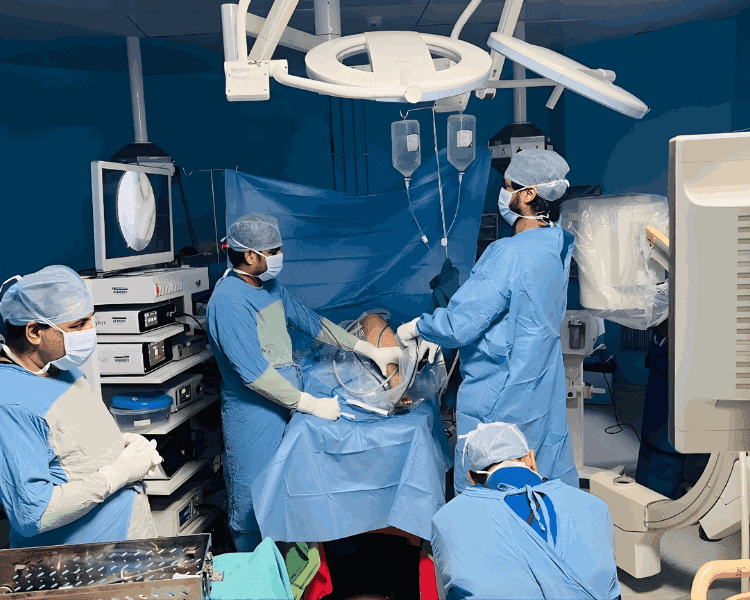
Modern Operation Theatre
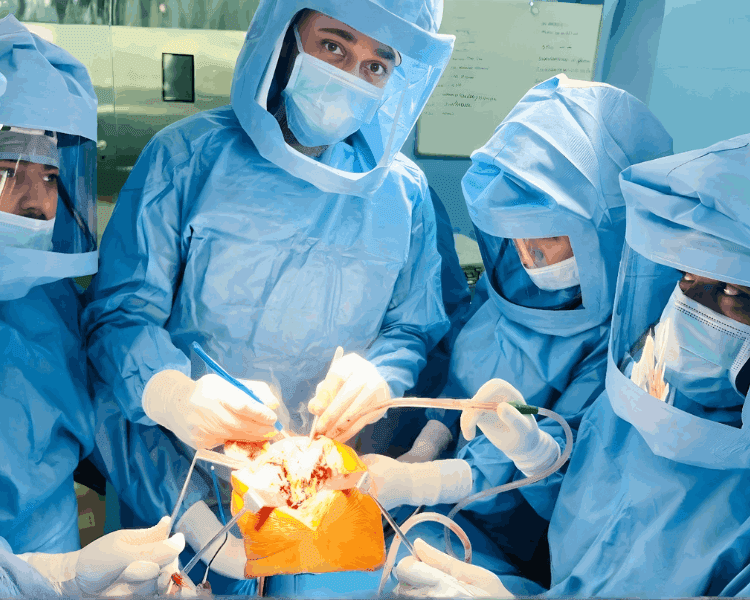
Precision Surgery in Progress
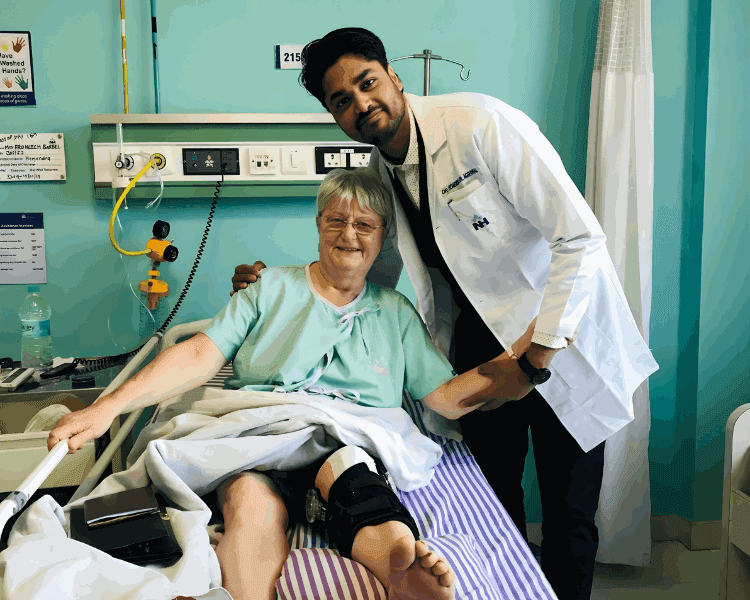
Attentive Post-Operative Care
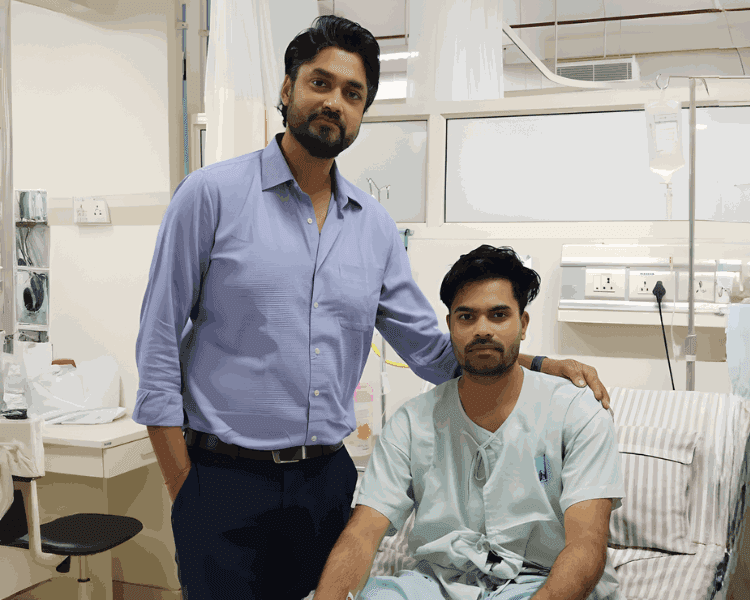
Personalized Patient Support
The Outcome
Key Benefits
How this procedure transforms your life
Significant pain relief: 90-95% of patients experience substantial reduction in elbow pain
Improved functional range of motion: typically 30-130 degrees of flexion-extension arc
Restored ability to perform daily activities: eating, grooming, reaching, and light manual tasks
Stable joint: linked implants provide stability even in patients with ligament deficiency
Better alternative to arthrodesis (joint fusion), preserves motion while eliminating pain
Improved quality of life: reduced dependence on others for basic self-care activities
Predictable outcomes with modern implant designs and surgical techniques
Relief from sleep-disturbing night pain
Your Journey
Recovery Timeline
What to expect during your recovery journey, step by step
Immediate Post-Op
Posterior splint immobilization, pain management, elevation to reduce swelling. Finger and wrist movements encouraged. Ulnar nerve function monitored.
Early Mobilization
Gentle active-assisted range of motion exercises begin. Splint used between exercise sessions. Suture removal at 2 weeks. Focus on regaining flexion and extension.
Progressive Rehabilitation
Splint discontinued. Active range of motion exercises progressed. Light daily activities with the operated arm. Avoid lifting more than 1 kg.
Strengthening Phase
Progressive strengthening exercises for arm muscles. Gradual increase in activity level. Lifting limit increased to 2-3 kg. Return to desk work.
Long-Term
Maximum recovery achieved. Permanent 5 kg lifting restriction for the replaced arm to protect the implant. Avoid repetitive forceful activities. Annual follow-up.
Insurance & Panels
Insurance & Cashless Options for Elbow Replacement
Government panels and health insurance we help you claim, with cashless coordination and complete paperwork support.
CGHS
For central government employees & pensioners
ECHS
For ex-servicemen (defence) & dependents
RGHS
For Rajasthan government employees & pensioners
Railway Panel
For railway employees & pensioners
Ayushman Bharat
Cashless cover up to ₹5 lakh per family / year
MAA / Chiranjeevi
Rajasthan cashless cover · via Jan Aadhaar
Cashless Insurance
Cashless orthopedic surgery via your health insurer
Explore More
Other Services
Explore our full range of related procedures






FAQ
Frequently Asked Questions
Get answers to common questions about this procedure
Ready to Take the First Step?
Book a consultation with Dr. Hemendra Agrawal to discuss your condition and explore the best treatment options for you.