
Knee Arthroscopy - Meniscus Repair in Jaipur
Advanced Minimally Invasive Meniscus Repair by Dr. Hemendra Agrawal

Dr. Hemendra Agrawal
MBBS, MS (Orthopedics) · Senior Orthopedic Consultant, Narayana Hospital
Overview
What is Meniscus Repair?
Meniscus repair is a minimally invasive arthroscopic procedure performed to repair torn meniscal cartilage in the knee. The meniscus is a C-shaped cartilage that acts as a shock absorber between the thigh bone (femur) and shin bone (tibia), providing stability, load distribution, and joint lubrication.
When the meniscus is torn due to sports injuries, twisting movements, or degeneration, it can cause pain, swelling, locking, and instability of the knee joint. Unlike meniscus removal, repair focuses on preserving the natural cartilage, which is crucial for long-term joint health.
Dr. Hemendra Agrawal specializes in advanced arthroscopic meniscus repair techniques using high-definition cameras and specialized instruments through small incisions. Preserving the meniscus significantly reduces the risk of future arthritis and ensures better knee biomechanics.
The procedure is typically performed under spinal or general anesthesia and allows patients to recover faster with minimal pain, smaller scars, and quicker return to daily activities.
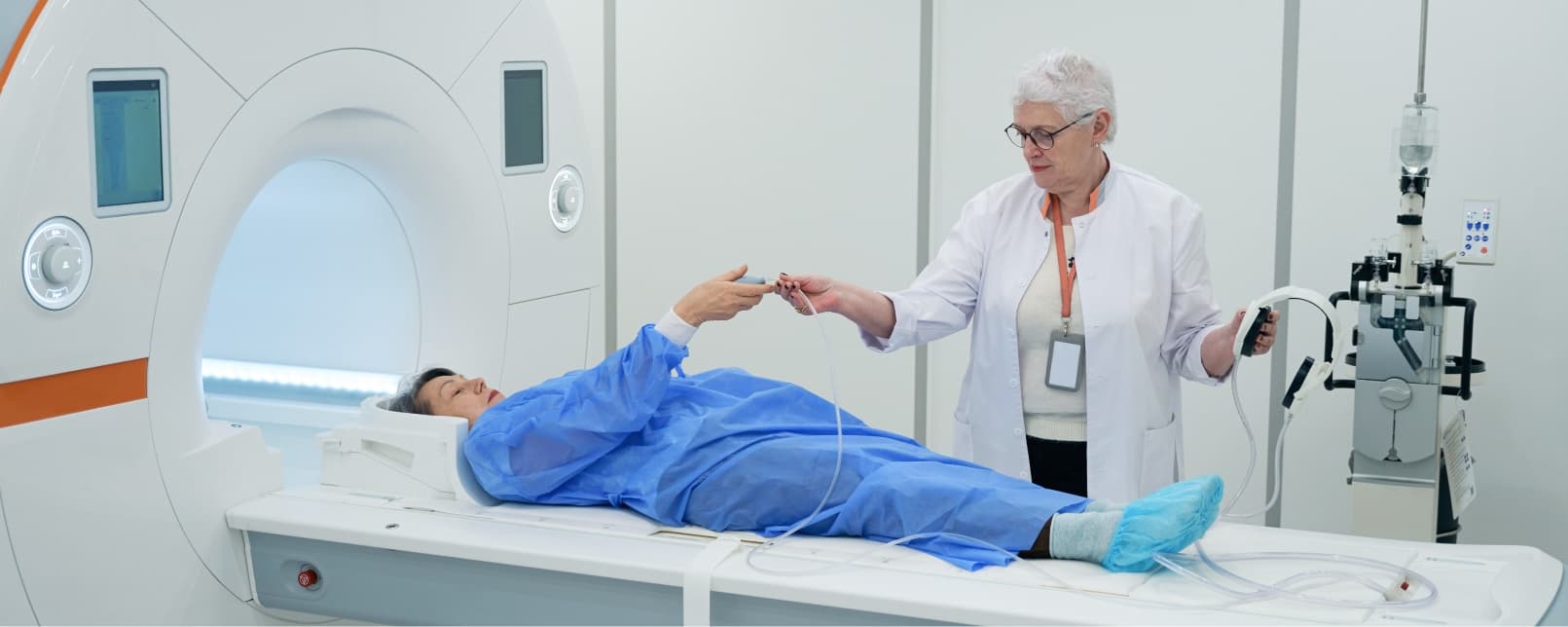
Precise diagnosis using advanced imaging & evaluation
20,000+
Successful Surgeries
When It's Needed
Conditions & Indications
When is this procedure recommended? These are the conditions where Knee Arthroscopy - Meniscus Repair typically offers the best outcome.
Experiencing these symptoms?
An accurate diagnosis is the first step. Get an expert evaluation from Dr. Hemendra Agrawal.
Book a ConsultationAcute meniscus tear due to sports injury or trauma
Bucket handle tear causing knee locking
Persistent knee pain with confirmed meniscus injury on MRI
Swelling and restricted knee movement
Young or active patients where meniscus preservation is preferred
Meniscus tears in the vascular (red-red or red-white) zone
Associated ligament injuries like ACL tear
Recurrent knee instability due to meniscal damage
Step by Step
How is Meniscus Repair Performed?
A detailed walkthrough of the surgical process
Step 01 / 06
Pre-Operative Evaluation
Clinical examination, MRI scan to assess tear pattern, blood tests, and fitness clearance. Surgical planning is done based on tear location and type.
Step 02 / 06
Anesthesia & Setup
Procedure is performed under spinal or general anesthesia. The knee is positioned and sterilized, and a tourniquet may be applied.
Step 03 / 06
Arthroscopic Access
Small keyhole incisions (portals) are made, and an arthroscope (camera) is inserted to visualize the knee joint on a screen.
Step 04 / 06
Meniscus Assessment
The surgeon evaluates the tear type, location, and suitability for repair instead of removal.
Step 05 / 06
Meniscus Repair
Special suturing devices are used to stitch the torn meniscus. Techniques include inside-out, outside-in, or all-inside repair methods.
Step 06 / 06
Closure
Instruments are removed, incisions are closed with sutures, and sterile dressing is applied.
Facilities & Care
Advanced Surgery & Personalized Care
From a state-of-the-art operation theatre to attentive post-operative recovery: you're in expert hands at every step.
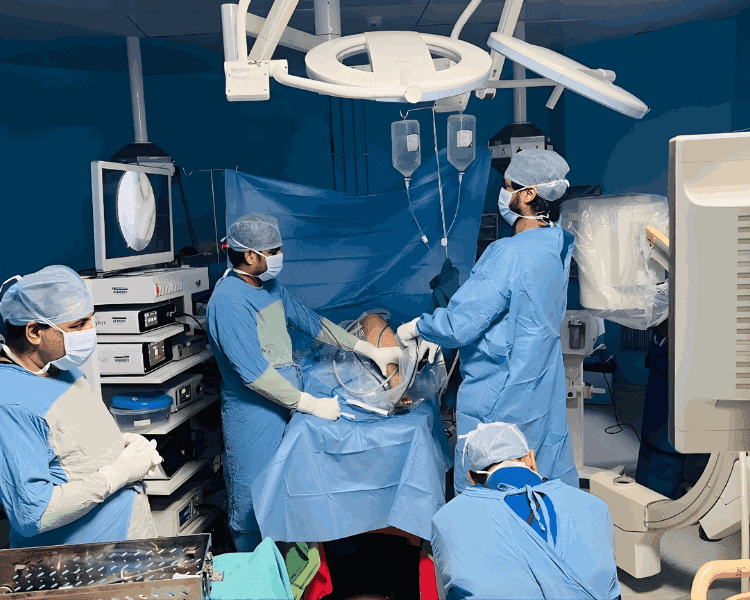
Modern Operation Theatre
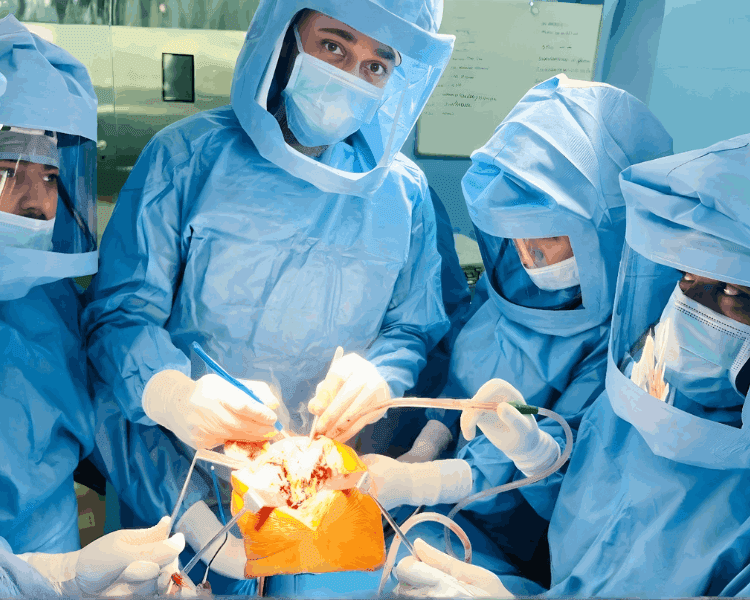
Precision Surgery in Progress
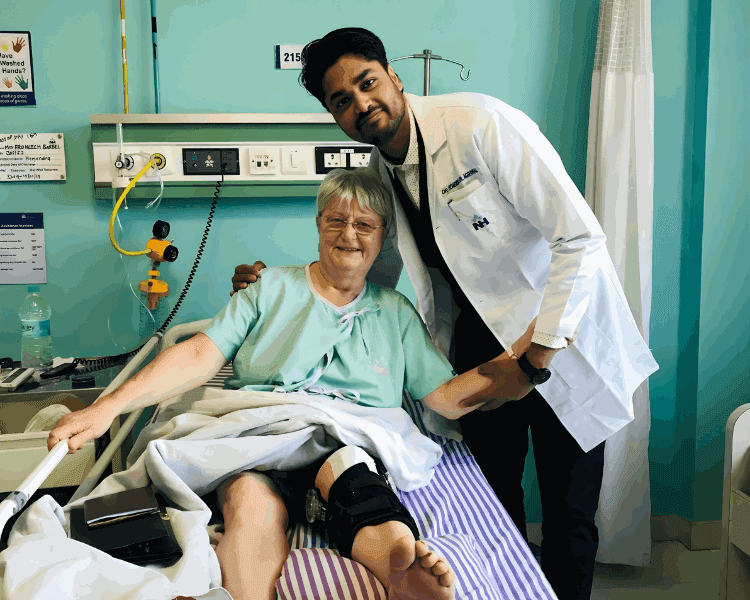
Attentive Post-Operative Care
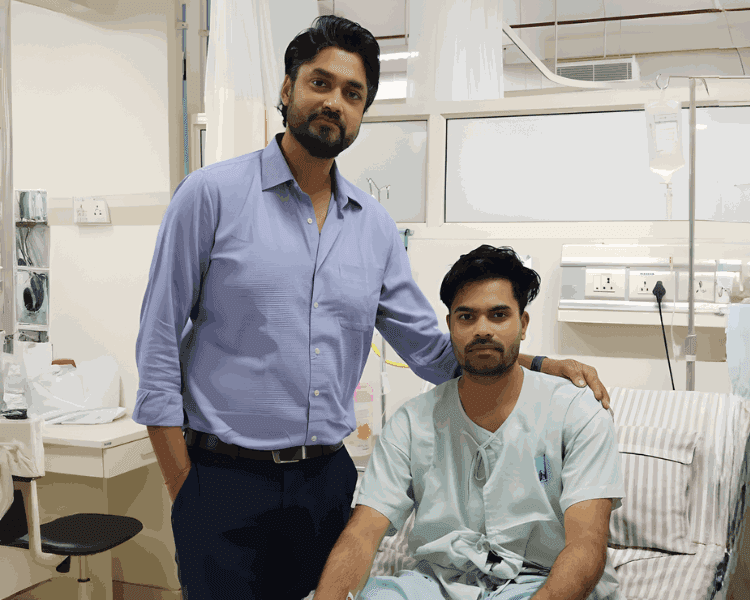
Personalized Patient Support
The Outcome
Key Benefits
How this procedure transforms your life
Preserves natural knee cartilage
Prevents early onset arthritis
Maintains knee stability and function
Minimally invasive with small scars
Faster recovery compared to open surgery
Better long-term outcomes than meniscus removal
Reduced joint degeneration risk
Early return to sports and activities
Your Journey
Recovery Timeline
What to expect during your recovery journey, step by step
Initial Recovery
Use of knee brace, limited weight-bearing, pain control, and swelling management.
Controlled Movement
Gradual increase in knee movement and physiotherapy exercises.
Strengthening Phase
Muscle strengthening, improved mobility, and progressive weight-bearing.
Return to Activity
Return to sports and full activity depending on healing and rehab progress.
Insurance & Panels
Insurance & Cashless Options for Knee Arthroscopy - Meniscus Repair in Jaipur
Government panels and health insurance we help you claim, with cashless coordination and complete paperwork support.
CGHS
For central government employees & pensioners
ECHS
For ex-servicemen (defence) & dependents
RGHS
For Rajasthan government employees & pensioners
Railway Panel
For railway employees & pensioners
Ayushman Bharat
Cashless cover up to ₹5 lakh per family / year
MAA / Chiranjeevi
Rajasthan cashless cover · via Jan Aadhaar
Cashless Insurance
Cashless orthopedic surgery via your health insurer
Explore More
Other Services
Explore our full range of related procedures

Knee Arthroscopy - Meniscus Repair
Learn more

Knee Arthroscopy - Meniscus Debridement
Learn more

Knee Arthroscopy - ACL Reconstruction
Learn more

Knee Arthroscopy - PCL Reconstruction
Learn more

Shoulder Arthroscopy - Rotator Cuff Repair
Learn more

Shoulder Arthroscopy - Labrum Repair
Learn more

Ankle Arthroscopy
Learn more

Wrist Arthroscopy
Learn more

Elbow Arthroscopy
Learn more

Diagnostic Arthroscopy
Learn more

Corrective Arthroscopy
Learn more
FAQ
Frequently Asked Questions
Get answers to common questions about this procedure
Ready to Take the First Step?
Book a consultation with Dr. Hemendra Agrawal to discuss your condition and explore the best treatment options for you.