
PCL Injury Treatment Jaipur — Orthopedic Surgeon in Jaipur
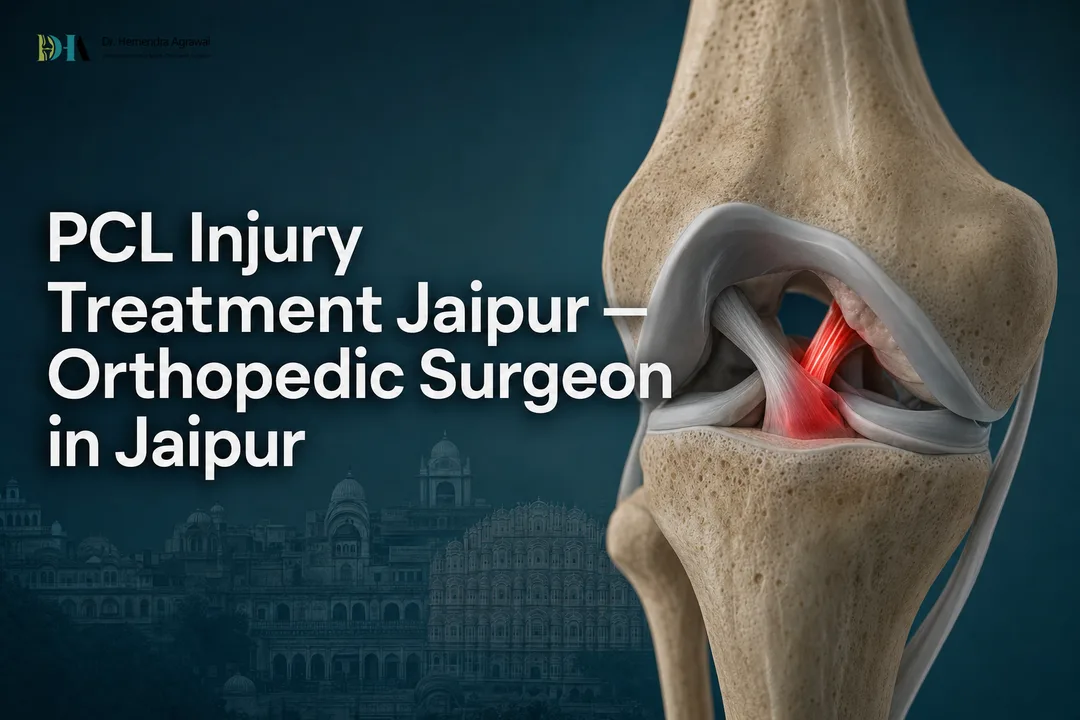
PCL Injury Treatment Jaipur — Orthopedic Surgeon in Jaipur is exactly what you searched for, and you are in the right place. If you need clear steps to recover your knee faster and safer, this guide shows you how. We will cover diagnosis, timelines, rehab that works, and when surgery makes sense. You will also learn how an experienced orthopedic team helps you return to running, squats, or daily stairs with confidence.
Understanding Your PCL: Injury Types, Symptoms, and Risks
The posterior cruciate ligament (PCL) stabilizes your knee by preventing the shinbone from sliding backward. A sudden blow to the front of the bent knee, a twist during sport, or a fall on a flexed knee can injure it. Common symptoms include deep knee pain, swelling within hours, a feeling of looseness, and trouble with downhill walking or descending stairs.
In our daily practice at Pratap Nagar and Narayana Hospital Jaipur, we see two broad PCL patterns. First, isolated sprains or partial tears from sports or slips. Second, combined injuries after road traffic accidents, often with meniscus or collateral damage. Because combined injuries change the plan, early expert assessment matters.
Common causes in Jaipur’s athletes and commuters
Two scenarios appear again and again. A footballer or kabaddi player lands awkwardly on a bent knee. Or a biker’s knee hits the dashboard or handlebar during a sudden stop. In both cases, knee swelling builds and weight-bearing feels unstable. Therefore, do not ignore these signs if they follow a direct blow to a bent knee.
When knee swelling means more than a bruise
Swelling plus a sense that the shin “drops back” can indicate a PCL injury. Meanwhile, bruising over the front of the shin may hint at the impact point. If you feel catching or locking, the meniscus might also be involved. Importantly, pain alone cannot grade a tear, so clinical tests and imaging guide the choice between rehab and surgery.
Red flags that need urgent assessment
See a specialist quickly if you cannot bear weight, the knee looks deformed, there is numbness in the foot, or the skin shows a deep wound from trauma. Early action can protect cartilage and nerves, especially after high-energy accidents.
Diagnosis and Imaging: Getting the Right Start
Accurate diagnosis starts with a structured knee exam. The posterior drawer test, sag sign, and dial test help grade laxity and screen for combined injury. X-rays look for fractures or avulsion. MRI shows the PCL, menisci, cartilage, and collateral ligaments in detail, which shapes your treatment plan and timeline.
According to the Mayo Clinic’s overview of PCL injuries, a direct blow to the bent knee is a common mechanism, and many isolated tears improve with structured rehabilitation. Similarly, the Cleveland Clinic notes that PCL tears are less common than ACL tears, but missed diagnoses can lead to chronic instability and cartilage wear. Because of this, we pair hands-on testing with MRI to avoid under-treating hidden damage.
From experience, the earlier we confirm the grade, the better we protect the joint. As a result, we can start bracing, progressive loading, and quadriceps-focused rehab without delay. When patients arrive late, swelling, stiffness, and muscular inhibition slow progress.
PCL Injury Treatment Jaipur: How-To Return Safely Faster
PCL care follows a decision tree based on tear grade, knee stability, and your goals. Many Grade I–II injuries respond well to nonoperative treatment. We use a PCL-specific brace, taping to reduce posterior sag, early edema control, and targeted exercises. Meanwhile, we avoid heavy hamstring loading early because it can pull the shin backward.
Here is a simple framework we use in clinic. First, calm the knee: ice, compression, elevation, and protected weight-bearing. Second, restore motion without forcing end range. Third, build quadriceps strength for anterior support. Fourth, integrate balance and gait drills. Finally, reintroduce running, cutting, and sport tasks in a graded way.
Sports injury specialist Jaipur: rehab priorities
Rehab quality decides speed and safety more than any single device. Therefore, we focus on four pillars: swelling control, motion, strength, and neuromuscular control. Equally important, we test function milestones before advancing to impact or pivoting drills.
Week-by-week starter plan
- Weeks 0–2: Brace, edema control, heel slides, quad sets, and gentle cycling as pain allows.
- Weeks 2–6: Add mini-squats, step-ups, bridges without heavy hamstring load, and balance drills.
- Weeks 6–10: Progress to leg press ranges, lateral movements, and controlled jogging if pain-free.
- Weeks 10–16: Integrate cutting, deceleration, plyometrics, and return-to-sport testing.
Timeframes vary with tear grade and combined injuries. However, most patients notice clear gains by the sixth week if they follow the plan consistently. If pain, instability, or swelling persist, we reassess the plan and the brace fit.
Surgery becomes an option when the knee remains unstable, the tear is high-grade with functional laxity, or other ligaments and menisci also need repair. Arthroscopic PCL reconstruction uses a graft to restore stability, followed by a disciplined rehab plan. Because technique and timing influence outcomes, choose a surgeon who performs these procedures regularly.
Why Choose an Orthopedic Surgeon in Jaipur for PCL Care
Local expertise saves time, reduces travel stress, and keeps your rehab team coordinated. At Narayana Hospital Jaipur and Ortho K Link Clinic, Dr. Hemendra Agrawal and team treat isolated and multi-ligament injuries daily. We combine minimally invasive techniques with modern rehabilitation to shorten downtime while protecting long-term joint health. To explore our services, visit Ortho K Link Clinic Jaipur.
Continuity also matters. Athletes need quick feedback loops between the surgeon, physiotherapist, and trainer. Likewise, working professionals benefit from work-specific modifications. Our team aligns your daily routine with your recovery stages, so you progress without flare-ups. For a direct consult with the senior team, you can also reach us through our official clinic website.
Recovery Roadmap: Rehab Milestones, Timelines, and Return-to-Sport
Recovery is not just about time; it is about meeting milestones. First, your swelling and pain should settle so you can walk without a limp. Next, knee flexion and extension should return close to baseline. Then, quadriceps strength needs to match the other leg. Finally, dynamic tests such as hop tests, deceleration drills, and agility runs must be passed without compensation.
Because each knee and sport differ, we personalize drills. For runners, cadence and stride checks prevent overstriding loads. For footballers, cutting and landing mechanics protect the graft or healing ligament. In addition, we monitor sleep, nutrition, and recovery stress, which often separate fast recoveries from slow ones.
Consult an orthopedic surgeon in jaipur: What to expect
Your first visit covers a movement screen, ligament testing, and imaging review. Then we map a phased plan with clear do’s and don’ts. Expectations stay realistic, and we adapt the plan if combined injuries are present. Importantly, we explain why certain exercises are delayed, so you avoid setbacks from early hamstring strain.
Safe return-to-sport checklist
- No swelling after training sessions and full extension restored.
- Quadriceps strength within a close range compared to the other leg.
- Stable single-leg squat and hop landings without knee collapse.
- Confidence during cutting and deceleration at game speed.
- Passed functional tests agreed upon by your care team.
In our experience, honest testing builds trust and reduces reinjury risk. Moreover, it helps athletes and office workers alike return to daily life without guarding or fear.
Every plan includes nuance. For example, a desk-based professional may return to work within days using a brace and activity breaks. In contrast, a competitive winger needs weeks of neuromuscular retraining before match play. Consequently, we judge readiness by function, not the calendar alone.
In short, structure beats guesswork. When your plan coordinates bracing, swelling control, mobility, strength, and testing, you return sooner and safer. If you still feel uncertain after reading this guide, schedule a review and bring your MRI; we will lay out a stepwise path that fits your goals.
Book your consultation with Dr. Hemendra Agrawal today. Your joints deserve nothing less.
Contact Information
For expert consultation and personalized care, you can reach at:
📞 Phone: +91 92106 96045
📍 Narayana Hospital, Jaipur
SEC 28, Kumbha Marg, Pratap Nagar,
Sanganer, Sitapura Industrial Area, Sitapura,
Jaipur, Rajasthan – 302033
📍 Pratap Nagar Clinic
183/82, Rana Sanga Marg, Sector 18,
Pratap Nagar, Jaipur, Rajasthan – 302033