
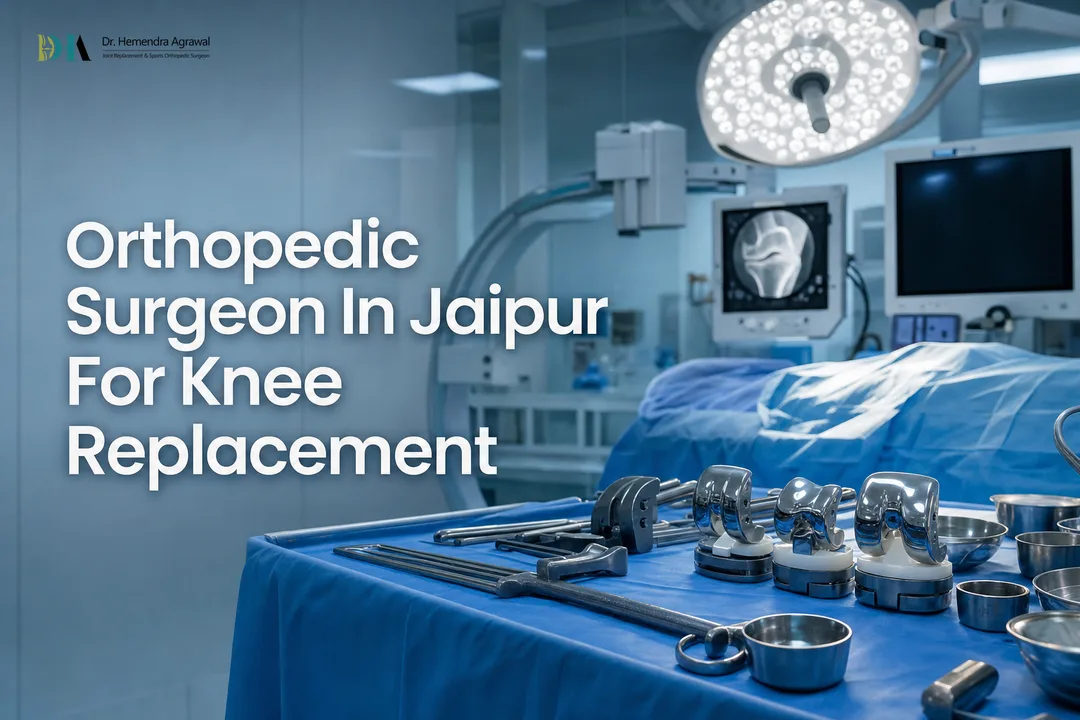
Orthopedic Surgeon In Jaipur For Knee Replacement
If you are searching for the Best Knee Replacement Surgeon in Sri Ganganagar, it helps to start by understanding what truly makes a safe, predictable knee replacement plan. Many Rajasthan patients also choose an orthopedic surgeon in jaipur for advanced joint replacement options, experienced teams, and structured rehabilitation. In this guide, you will learn how to evaluate a surgeon, what to expect from modern knee replacement, and how to plan travel and recovery with clarity.
Why Many Patients Compare Sri Ganganagar With Jaipur
First, knee replacement results depend on more than the implant. They depend on accurate diagnosis, surgical planning, infection control, and rehab discipline. Because of that, people often compare nearby cities before they book surgery.
In addition, Jaipur offers access to high-volume orthopedic units and multidisciplinary support. That matters when you have diabetes, obesity, heart disease, or prior knee surgeries. Similarly, patients with complex deformity or stiffness may need a surgeon who routinely handles difficult cases.
However, travel should never feel like a burden. Therefore, you should weigh convenience against surgical experience, hospital safety protocols, and follow-up planning. A clear plan can make out-of-town care surprisingly smooth.
What “Best” Means For Knee Replacement Care
Importantly, “best” should not mean marketing. Instead, it should mean the right surgeon for your knee, your lifestyle, and your medical risk profile. That includes honest counselling about benefits and limits.
For example, a good knee replacement surgeon explains whether you need total knee replacement or partial replacement. They also discuss alignment strategy, implant fixation, and realistic timelines for walking and stair climbing.
Safety Systems Matter As Much As Surgical Skill
Notably, sterile operating room practices and perioperative protocols reduce avoidable complications. In addition, a structured physiotherapy pathway improves function after surgery. Because of this, hospital selection becomes part of surgeon selection.
Orthopedic Surgeon in Jaipur: What To Look For
When you compare options, focus on measurable signals. First, look for a surgeon who specialises in joint replacement and sees a wide range of arthritis severity. Second, confirm the surgeon works with a hospital that has strong anaesthesia, ICU backup, and infection control.
In our day-to-day clinical work, we repeatedly see one pattern. Patients who do best come prepared with questions and prior reports. As a result, we can match the procedure to the person, not just the X-ray.
Therefore, use this checklist during your consultation:
- Diagnosis clarity: osteoarthritis, rheumatoid arthritis, post-traumatic arthritis, or avascular issues.
- Non-surgical trial: physiotherapy, weight management, injections, and pain control attempts when appropriate.
- Procedure fit: partial vs total knee replacement based on compartments involved.
- Rehab roadmap: walking milestones, stair practice, and return-to-work guidance.
- Follow-up plan: stitch removal, physiotherapy checks, and red-flag education.
Meanwhile, remember that every knee does not need immediate surgery. If your pain improves with strengthening and alignment care, your surgeon should say so.
Understanding Knee Replacement: Who Needs It And Why
Typically, patients consider knee replacement when pain limits daily life despite guided treatment. For instance, you may struggle with standing from a chair, walking short distances, or sleeping due to knee pain.
Moreover, knee arthritis changes joint cartilage and can deform the leg. Over time, that changes mechanics, increases swelling, and weakens thigh muscles. Consequently, your “good knee” may also start hurting from overuse.
Importantly, major medical bodies describe knee replacement as a well-established option for end-stage arthritis. For evidence-based overviews, you can review joint replacement education from the Mayo Clinic orthopedic surgery department and guidance on arthritis care from the NIAMS osteoarthritis resource.
Signs You May Be Ready For Surgery
First, consistent pain that blocks routine tasks is a key signal. Second, bow-legs or knock-knees that keep worsening can indicate joint collapse. Finally, loss of knee extension may create a limp and back pain.
However, imaging alone should not decide surgery. Some people show severe arthritis on X-ray yet manage well. Therefore, your symptoms, function, and goals must lead the decision.
What Happens During A Modern Knee Replacement
During a total knee replacement, the surgeon removes damaged joint surfaces and reshapes bone ends. Next, they fit metal components with a spacer that helps smooth movement. After that, early walking begins under supervision.
Many centres now use patient-specific planning or computer assistance. In addition, minimally invasive approaches may reduce soft-tissue disruption for selected patients. Still, your anatomy and deformity decide the safest approach.
Notably, major orthopaedic centres stress that rehabilitation drives outcomes. For detailed, patient-friendly education, see knee replacement and recovery information from Cleveland Clinic.
How Dr. Hemendra Agrawal Supports Knee Replacement Patients
If you want a dependable pathway in Rajasthan, Dr. Hemendra Agrawal offers experienced orthopedic care in Jaipur with over 15 years in joint replacement surgery, arthroscopy, sports injury treatment, ligament reconstruction, fracture management, and trauma care. He serves as a Senior Orthopedic Consultant at Narayana Hospital Jaipur and leads Ortho K Link Clinic as Founder and Director.
Importantly, knee replacement planning works best when the surgeon considers the full orthopedic picture. For example, back stiffness, hip arthritis, and ankle alignment can all affect knee load. Therefore, a complete gait and joint evaluation helps prevent surprises after surgery.
In addition, patients who come with old ligament injuries or prior arthroscopy need tailored planning. That is where broad experience in arthroscopic surgery and ligament care can help.
If you would like to know more about the clinic’s approach and services, you can visit Ortho K Link Clinic’s orthopedic care resources. You can also learn about the doctor’s background at Dr. Hemendra Agrawal’s profile page.
Minimally Invasive Thinking And Rehab-First Planning
First, the goal is to reduce pain while restoring stable function. Therefore, the team focuses on careful pre-surgery counselling, optimisation of medical conditions, and a stepwise rehab plan. In many cases, this approach reduces anxiety and improves participation in physiotherapy.
Moreover, modern rehabilitation emphasises early mobility and quad strengthening. Because of that, many patients regain confidence faster when they follow a structured schedule.
Practical Questions To Ask Before You Book Surgery
When you meet a surgeon, go beyond “How long will it last?” Instead, ask questions that reveal planning depth and safety focus. As a result, you will feel more in control.
Consider asking:
- First, what diagnosis explains my pain: arthritis, meniscus tear, or ligament injury?
- Second, do I need total knee replacement or partial replacement?
- Next, what rehab schedule do you recommend for the first six weeks?
- Moreover, how do you manage infection prevention and blood clot risk?
- Finally, what warning signs should make me call you after surgery?
Similarly, discuss any travel needs if you come from Sri Ganganagar. For example, ask when you can safely sit for long car rides and how to continue physiotherapy near home.
However, keep expectations realistic. Knee replacement usually improves pain and walking tolerance, yet it may not feel like a “natural” knee. Results vary depending on age, muscle strength, weight, deformity, and rehab consistency.
To illustrate a key point, many orthopaedic programs encourage prehab. That means strengthening before surgery. Consequently, patients often find post-op therapy easier.
Conclusion: Choosing The Right Team For Your Knee
In short, the Best Knee Replacement Surgeon in Sri Ganganagar is the one who matches your condition with the safest technique and a clear rehab roadmap. If you are also considering an orthopedic surgeon in jaipur, prioritise proven experience, hospital safety systems, and a follow-up plan that works even when you travel back home.
Above all, choose a surgeon who explains options in plain language. A transparent plan builds trust and supports a smoother recovery journey.
Book Your Consultation
Book your consultation with Dr. Hemendra Agrawal today. Your joints deserve nothing less.
Contact Information
For expert consultation and personalized care, you can reach at:
📞 Phone: +91 92106 96045
📍 Narayana Hospital, Jaipur
SEC 28, Kumbha Marg, Pratap Nagar,
Sanganer, Sitapura Industrial Area, Sitapura,
Jaipur, Rajasthan – 302033
📍 Pratap Nagar Clinic
183/82, Rana Sanga Marg, Sector 18,
Pratap Nagar, Jaipur, Rajasthan – 302033