
Orthopedic Surgeon in Jaipur: Joint Pain Relief Options
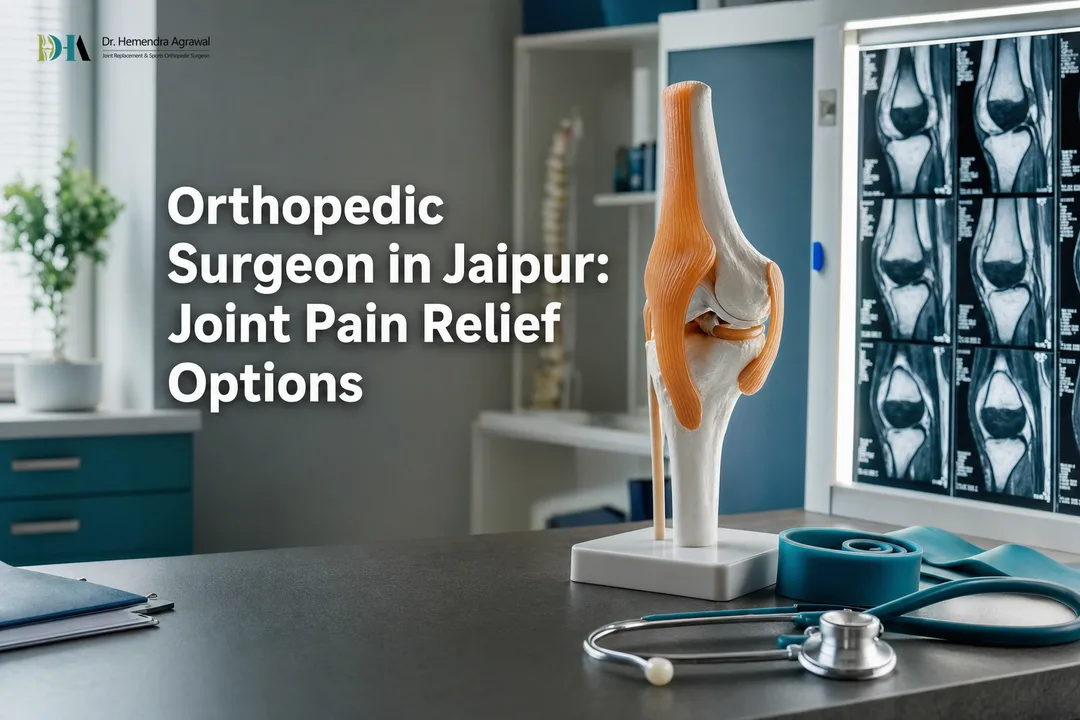
Orthopedic Surgeon in Jaipur: Joint Pain Relief Options is for anyone searching for an orthopedic surgeon in jaipur because stairs hurt, mornings feel stiff, or a sports injury keeps returning. In this guide, you will learn what joint pain usually means, which tests matter, and how specialists choose between medicines, physiotherapy, arthroscopy, or joint replacement.
What Joint Pain Is Really Telling You
Joint pain is a signal, not a diagnosis. First, you need to know whether the problem comes from cartilage wear, inflamed lining, a torn ligament, or an injury around the joint. Because of that, “one painkiller for all” often disappoints.
Importantly, the pattern of pain offers clues. For example, arthritis often causes deep aching and stiffness after rest. In contrast, a ligament tear may cause giving-way, swelling after activity, and fear during turns.
Common Causes We See In Jaipur Clinics
In Jaipur and nearby Rajasthan regions, we repeatedly see knee osteoarthritis, meniscus tears, ACL injuries from twisting, and shoulder impingement from overhead work. In addition, old fractures that healed with minor deformity can overload a joint and trigger early wear.
Moreover, vitamin D deficiency and low muscle strength can amplify symptoms. That does not create arthritis alone, yet it can make everyday pain feel much worse. Therefore, a complete plan looks beyond the X-ray.
Red Flags That Need Early Assessment
First, sudden swelling after a twist, an audible “pop,” or inability to bear weight deserves prompt evaluation. Next, fever with joint pain, an open wound near a joint, or numbness after an accident also needs urgent orthopedic trauma care. Consequently, early action can prevent avoidable stiffness and complications.
How An Orthopedic Surgeon In Jaipur Evaluates Pain
An experienced orthopedic surgeon in jaipur starts with a focused history and a hands-on exam. Then, the doctor confirms the source with targeted tests. As a result, the treatment becomes precise instead of trial-and-error.
At Ortho K Link Clinic and at Narayana Hospital Jaipur, we often meet patients who already tried several home remedies. However, many have never had a structured assessment of alignment, stability, and muscle balance. Therefore, we keep the evaluation simple, but thorough.
Tests, Imaging, And What They Reveal
First, X-rays help us judge joint space, bone spurs, and alignment. Next, MRI helps when we suspect meniscus tears, ACL/PCL injuries, or cartilage defects. Similarly, ultrasound can guide evaluation of tendon problems around the shoulder or hip.
Notably, blood tests may help when inflammatory arthritis is likely. For patient education, you can review an overview of orthopedic diagnostic approaches at the Mayo Clinic orthopedic surgery department. That background helps you ask better questions during your visit.
Finally, we compare imaging with your symptoms. In fact, many people have MRI “findings” without pain. Because of this, we treat patients, not reports.
Treatment Options That Preserve Joints And Mobility
Most people do not need surgery on day one. Instead, the goal is to reduce inflammation, restore motion, and strengthen the right muscles. Moreover, when we time surgery well, we protect long-term function.
From daily knee pain to a sports injury, we choose care based on stability, cartilage status, age, goals, and work demands. Results vary depending on fitness, weight, diabetes control, and rehab effort. Therefore, we discuss trade-offs openly.
Here are practical options that often work when matched correctly:
- Medicines: short courses of anti-inflammatories when safe, plus stomach protection when needed.
- Physiotherapy: quad and hip strengthening for knee pain, rotator cuff rehab for shoulder pain, and gait training for hip pain.
- Injections: corticosteroid for flare control or hyaluronic acid in selected cases, after careful screening.
- Bracing and activity modification: knee unloading braces, correct footwear, and training changes for runners.
- Minimally invasive procedures: arthroscopic surgery for mechanical symptoms or ligament reconstruction when instability persists.
Importantly, global guidance emphasizes that movement and weight management can reduce osteoarthritis symptoms and improve function. You can explore patient-friendly recommendations on physical activity and health from the World Health Organization, which supports the role of regular activity for joint and overall health.
When Arthroscopy Or Ligament Surgery Helps
Arthroscopy uses small incisions and a camera. Therefore, it can address meniscus tears, loose bodies, and certain cartilage problems with less tissue disruption. However, it does not “cure” advanced arthritis, so we avoid it when X-rays show severe wear.
For athletes and active adults, ACL or PCL injuries can cause repeated giving-way. Consequently, ligament reconstruction may protect meniscus and cartilage from secondary damage. If you want deeper background on sports ligament care and return-to-play principles, the Hospital for Special Surgery (HSS) orthopedic resources offers clear education material.
In our day-to-day practice, we see that the best outcomes happen when patients commit to rehab. In addition, we see fewer setbacks when people avoid early twisting and follow a stepwise plan back to sport. That lived pattern repeats across ages and activity levels.
When Joint Replacement Becomes The Smart Choice
Knee replacement and hip replacement can be life-changing for the right patient. Still, we recommend them when pain and disability persist despite structured non-surgical care. Similarly, shoulder replacement can help when arthritis or complex rotator cuff disease destroys function.
First, we confirm that the joint surface damage matches your symptoms. Next, we review alignment, bone quality, and medical risks. After that, we set clear expectations for walking, stairs, driving, and work.
For many patients, minimally invasive orthopedic surgery principles help reduce soft-tissue trauma. Therefore, they can support earlier mobility and easier physiotherapy. Even so, surgery remains major. Because of that, we plan it only after optimizing blood sugar, anemia, and fitness.
What Recovery Actually Looks Like
Recovery depends on the procedure and your baseline strength. For knee replacement surgery, patients usually start walking with support soon after surgery, then build distance and stairs practice with a therapist. Meanwhile, swelling control and quadriceps activation stay central in the first weeks.
After ACL reconstruction, your milestones focus on knee extension, swelling control, and progressive strengthening. Therefore, return to running and sport follows a criteria-based program, not a fixed calendar. In contrast, fracture care may require protection first, then motion, then loading.
Above all, rehab is not optional. In fact, we often tell families that surgery fixes structure, but physiotherapy restores function. Because of this, we coordinate closely with rehabilitation teams and tailor home plans.
Choosing The Right Doctor And Clinic In Pratap Nagar
Choosing orthopedic care should feel clear, not confusing. First, look for a surgeon who explains the diagnosis in simple terms and shows you the imaging. Next, ask about non-surgical options before jumping to surgery.
Furthermore, ask who will guide your rehabilitation and how follow-ups work. A reliable clinic offers a plan for pain control, wound care, and safe return to activity. In addition, it should share warning signs that need urgent review.
Dr. Hemendra Agrawal brings 15+ years of experience across joint replacement, arthroscopy, ligament reconstruction, fracture management, and trauma care as a Senior Orthopedic Consultant at Narayana Hospital Jaipur and Founder & Director of Ortho K Link Clinic. You can learn more about the practice approach on OrthopedicJaipur.com and also review background details on Dr. Hemendra Agrawal’s orthopedic profile.
In short, choose a team that measures outcomes by your walking, sleep, and confidence. Also, choose a plan that fits your work and family responsibilities. That balance often decides success.
A Quick Checklist Before You Book
First, note when the pain started and what worsens it. Next, bring old X-rays, MRI reports, and a list of medicines. Finally, share your goals clearly, such as “climb stairs without fear” or “return to badminton.”
- Describe the exact location and nature of pain.
- Record swelling episodes and instability events.
- List prior treatments and what helped.
- Ask about risks, alternatives, and rehab steps.
Finally, if you are comparing options, remember that an in-person exam changes everything. Online advice cannot test stability, alignment, or nerve function. Therefore, use information as preparation, not a substitute for care.
If you are looking for an orthopedic surgeon in jaipur, the safest next step is a focused evaluation and a plan you can follow. Book your visit when pain limits your work, sleep, or mobility, and aim for steady progress instead of quick fixes.
Book your consultation with Dr. Hemendra Agrawal today. Your joints deserve nothing less.
Contact Information
For expert consultation and personalized care, you can reach at:
📞 Phone: +91 92106 96045
📍 Narayana Hospital, Jaipur
SEC 28, Kumbha Marg, Pratap Nagar,
Sanganer, Sitapura Industrial Area, Sitapura,
Jaipur, Rajasthan – 302033
📍 Pratap Nagar Clinic
183/82, Rana Sanga Marg, Sector 18,
Pratap Nagar, Jaipur, Rajasthan – 302033