
Orthopedic Surgeon In Jaipur: Hanumangarh Sports Injuries
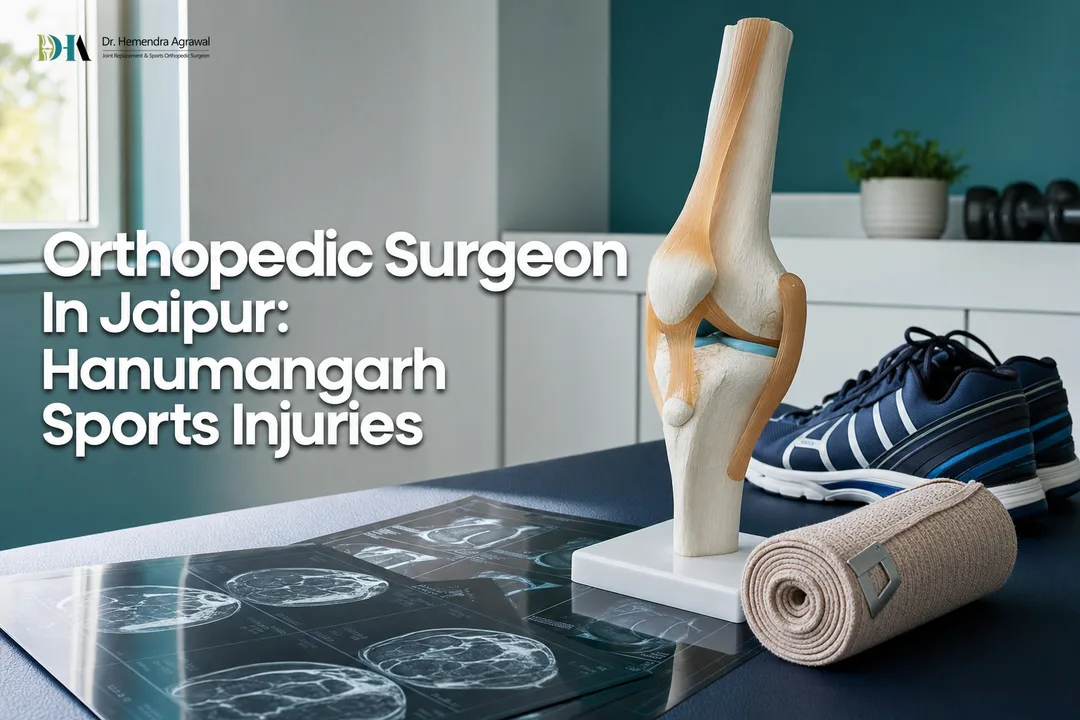
Sports Injury and Ligament Treatment in Hanumangarh often becomes urgent when swelling, giving-way, or sharp pain stops daily life. If you are searching for an orthopedic surgeon in jaipur to guide diagnosis, treatment, and recovery, this guide explains what matters most. Importantly, you will learn how ligament injuries happen, what early care should look like, and when advanced options like arthroscopy or reconstruction make sense.
Why Ligament Injuries Need Timely, Precise Care
Ligaments act like strong cables that stabilise your joints. Therefore, a tear can change the way your knee or shoulder moves. Even a small instability can raise the risk of further cartilage or meniscus damage. As a result, ignoring “minor” sports injuries often turns a short recovery into a long one.
In Hanumangarh and nearby towns, we often see injuries from football, kabaddi, volleyball, running, and gym training. However, accidents during farming work and two-wheeler slips can cause similar ligament trauma. Because of this overlap, the first goal stays the same: confirm what is injured, then match treatment to the patient’s sport, work, and timeline.
Notably, early, correct diagnosis also prevents unnecessary rest. In addition, it avoids the opposite mistake, which is returning to play too soon. Both extremes can delay healing.
Common Ligaments Affected in Real-World Sports
Knee injuries dominate because the knee combines mobility with load-bearing. For example, the ACL supports rotational stability, while the PCL resists backward shift of the tibia. Similarly, the MCL and LCL protect the knee from side-to-side forces.
Shoulder and ankle ligaments also get injured, especially with falls and sudden turns. Moreover, recurring ankle sprains can create chronic instability. Because of this, repeated “twists” deserve a proper evaluation.
Red Flags That Should Not Wait
Seek assessment quickly if you notice severe swelling within hours, a loud “pop,” inability to bear weight, or repeated buckling. Also, watch for a locked knee, where you cannot fully bend or straighten it. In contrast, mild soreness that improves each day usually responds to home care.
What We Often Observe in Clinic
In our day-to-day orthopedic practice, a pattern we repeatedly see is delayed consultation after an initial improvement. First, the pain reduces in a week, so many people restart sport. Then, the knee gives way during a simple pivot, and the swelling returns. Consequently, the injury becomes harder to manage and the rehab takes longer.
Another common issue is self-bracing without a diagnosis. While a brace can help temporarily, it does not tell you whether you have an ACL tear, a meniscus injury, or a cartilage lesion. Therefore, a targeted plan needs an accurate label.
Sports Injury and Ligament Treatment in Hanumangarh: A Practical Pathway
Good care follows a step-by-step pathway. First, we listen to how the injury happened. Next, we examine joint stability and check for swelling, tenderness, and range of motion. Finally, we confirm the diagnosis with imaging when needed.
For many patients travelling from Hanumangarh to Jaipur, clarity matters. Therefore, the plan should answer three questions: What is torn, what can heal without surgery, and what rehab timeline is realistic for your goals.
Diagnosis: Exam, X-Ray, And MRI When Needed
A skilled clinical exam can strongly suggest ACL, PCL, or collateral ligament injury. However, swelling and guarding can hide instability in the first few days. Because of this, we sometimes re-examine after pain reduces.
X-rays help rule out fractures and avulsion injuries. Meanwhile, MRI shows soft tissues like ACL, PCL, meniscus, and cartilage. Importantly, an MRI report should match the patient’s symptoms and exam. In other words, treatment targets the person, not only the scan.
Early Home Care That Actually Helps
In the first 48 to 72 hours, smart first-aid reduces swelling and pain. As a result, you regain motion faster and you prepare the joint for rehab.
- Rest: stop the provoking activity and protect the joint.
- Ice: apply cold packs in short sessions several times a day.
- Compression: a crepe bandage can limit swelling.
- Elevation: keep the limb raised above heart level when possible.
- Safe movement: gentle range-of-motion exercises prevent stiffness.
However, avoid aggressive stretching or deep squats early on. Also, do not “test” the knee by jumping or twisting. That can worsen a partial tear.
Choosing The Right Treatment: Rehab, Arthroscopy, Or Reconstruction
Not every ligament injury needs surgery. In fact, many partial tears and stable injuries respond well to structured physiotherapy. On the other hand, complete ACL tears with instability often need reconstruction for active patients.
Results vary depending on the tear type, associated meniscus damage, fitness, and rehab compliance. Therefore, a personalised plan matters more than a one-size approach.
When Physiotherapy Is The Best First Step
Physiotherapy focuses on swelling control, restoring motion, and rebuilding strength. Importantly, the quadriceps and hamstrings act like dynamic stabilisers. Because of this, strength training can reduce symptoms even when a ligament has some damage.
For example, many MCL injuries heal well because of good blood supply. Similarly, some PCL injuries remain stable with rehab and activity modification. Consequently, the decision depends on laxity, lifestyle, and sport demands.
How Arthroscopy Helps For Internal Joint Damage
Arthroscopy uses small incisions and a camera to address internal problems. For example, it can treat meniscus tears, remove loose bodies, or manage cartilage flaps. Therefore, arthroscopic surgery can reduce pain and mechanical locking when conservative care fails.
According to the American Academy of Orthopaedic Surgeons overview of knee arthroscopy, surgeons use arthroscopy to diagnose and treat a range of knee conditions through minimally invasive portals. That said, the best outcomes still depend on correct indications and strong rehab.
ACL/PCL Reconstruction: What Patients Should Expect
When the knee keeps giving way, reconstruction can restore stability for sports and demanding work. Typically, the surgeon replaces the torn ligament with a graft, such as hamstring or patellar tendon tissue. Next, a structured rehab plan helps the graft mature and the muscles regain control.
The Hospital for Special Surgery ACL guidance explains that many ACL tears do not heal on their own and may require surgery for athletes or those with instability. Similarly, the Mayo Clinic ACL injury page outlines treatment pathways that include rehabilitation and surgical reconstruction when appropriate.
Importantly, reconstruction is not an “instant fix.” Instead, it is a process. In particular, early rehab targets swelling and extension, while later rehab builds strength, agility, and confidence. Finally, return-to-sport decisions should use objective tests, not only time passed.
Recovery And Return To Sport: What Makes Outcomes Better
Recovery depends as much on rehab quality as on the procedure itself. Therefore, a good plan should include milestones for motion, strength, balance, and sport drills. Moreover, patients do best when they understand the “why” behind each phase.
At Ortho K Link Clinic and in hospital practice, we focus on realistic timelines and safe progression. Consequently, patients avoid the common loop of “restart too early, flare up, then stop again.”
Rehab Milestones That Matter More Than Dates
First, the knee should regain full straightening, because extension deficits can cause long-term issues. Next, swelling should remain controlled after exercise. Then, strength symmetry improves with progressive loading.
In addition, neuromuscular training reduces re-injury risk. For example, landing mechanics and hip control protect the knee during cutting sports. As a result, athletes return stronger and safer.
Preventing Re-Injury In Daily Life And Sports
Warm-ups, strength work, and technique coaching reduce injury risk. Similarly, proper footwear and playing surfaces matter for pivoting sports. Importantly, fatigue increases mistakes, so recovery sleep and hydration also help.
If you have arthritis or long-standing knee pain, manage it alongside the ligament issue. Otherwise, persistent inflammation can limit rehab progress. For broader orthopedic education and patient resources, you can also explore orthopedic care resources at OrthopedicJaipur.com.
When you need a plan that balances sport goals and joint safety, an experienced orthopedic surgeon in jaipur can coordinate imaging, rehab, and surgery if needed. Additionally, you can learn more about Dr. Hemendra Agrawal’s clinical approach through the clinic’s background and expertise.
When To Travel From Hanumangarh To Jaipur For Specialist Care
Many patients manage the initial injury locally, then seek advanced care when symptoms persist. Therefore, consider specialist evaluation if the knee repeatedly gives way, swelling returns after activity, or pain blocks work and sport.
Also, get a second opinion if you have a complex injury, such as combined ACL and meniscus tears, multi-ligament injury, or an associated fracture. In those cases, a detailed surgical plan and a strong rehab roadmap matter. Importantly, the goal is not “more surgery.” Instead, the goal is the right treatment at the right time.
For people who search “orthopedic surgeon near me” in North Rajasthan, coordination matters too. Consequently, your plan should include prehab, surgery scheduling when indicated, and clear rehab instructions for follow-up closer to home.
In summary, Sports Injury and Ligament Treatment in Hanumangarh works best when you combine early swelling control, accurate diagnosis, and a rehab-first mindset. If instability or internal joint damage persists, an orthopedic surgeon in jaipur can help you decide between physiotherapy, arthroscopy surgeon jaipur options, or ligament reconstruction. Ultimately, the safest return to sport comes from disciplined rehab and honest reassessment along the way.
Book Your Consultation
Book your consultation with Dr. Hemendra Agrawal today. Your joints deserve nothing less.
Contact Information
For expert consultation and personalized care, you can reach at:
📞 Phone: +91 92106 96045
📍 Narayana Hospital, Jaipur
SEC 28, Kumbha Marg, Pratap Nagar,
Sanganer, Sitapura Industrial Area, Sitapura,
Jaipur, Rajasthan – 302033
📍 Pratap Nagar Clinic
183/82, Rana Sanga Marg, Sector 18,
Pratap Nagar, Jaipur, Rajasthan – 302033