
Knee Pain on Stairs: See Orthopedic Surgeon in Jaipur
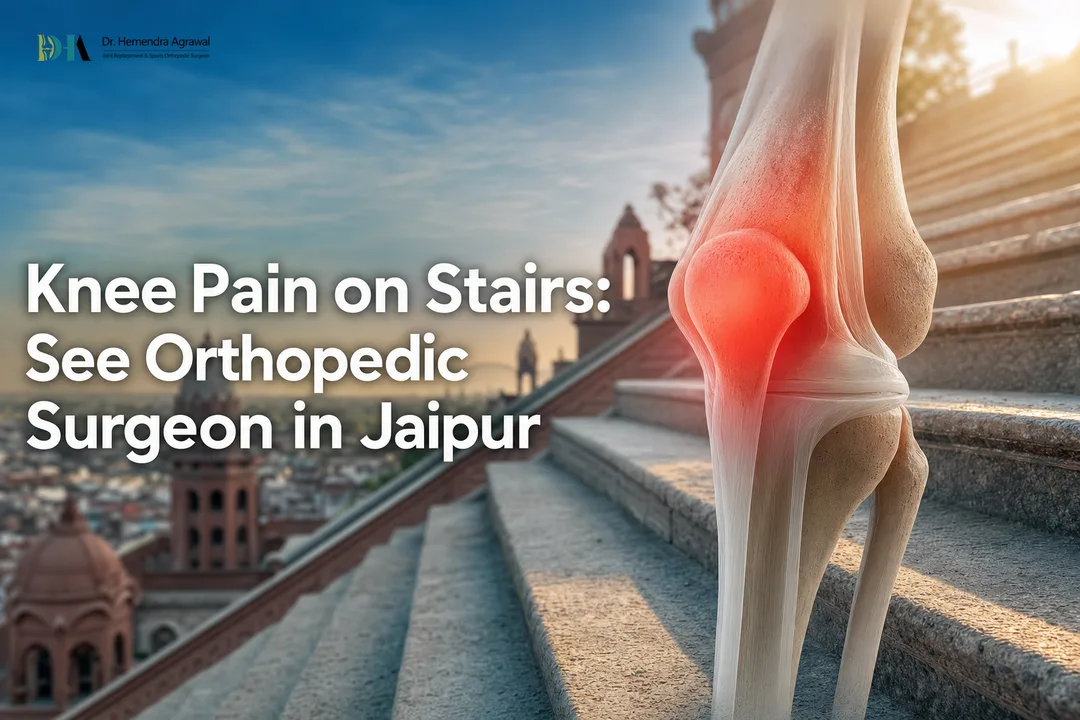
Knee Pain on Stairs: See Orthopedic Surgeon in Jaipur is more than a headline—it is a practical roadmap for anyone whose knee aches during walks or while climbing steps. As an experienced orthopedic surgeon in jaipur team, we see this problem daily and know the patterns, the pitfalls, and the proven fixes you can trust.
Why your knee hurts on stairs and during walks
Going up or down steps loads the kneecap and the joint surfaces more than level walking. Consequently, conditions that irritate the front of the knee often flare on stairs first. When the patella does not track smoothly, the underside rubs, and pain arrives sharply with each step.
In our Jaipur practice, we frequently evaluate patients whose pain began only on stairs. Over time, it often starts to appear on slopes, squats, or after sitting with bent knees. Importantly, not every sore knee is arthritis. Several soft-tissue issues also mimic early wear and tear.
Common conditions that trigger step pain
Several diagnoses tend to show up when stairs hurt but level walking feels easier. Patellofemoral pain syndrome causes aching around or behind the kneecap, and it typically worsens on stairs and after long sitting. Cleveland Clinic explains that this pattern is classic for kneecap overload.
- Patellofemoral pain syndrome (kneecap maltracking)
- Patellar tendinopathy (jumper’s knee), especially after sports
- Meniscus tears causing sharp, localized pain or catching
- Early osteoarthritis with morning stiffness and crepitus
- IT band friction or pes anserine bursitis on the inner knee
Risk multiplies with weak hip and thigh muscles, prior injury, flat feet, or poor shoe support. Furthermore, rapid training changes and weight gain increase joint load, so pain appears sooner on inclines and steps.
Red flags and when to see an orthopedic surgeon in jaipur
Most mild step pain improves with rest and targeted exercises within a few weeks. However, some symptoms point to a larger problem. If you cannot bear weight, if the knee locks or gives way, or if swelling appears immediately after a twist, you should seek expert care quickly. Mayo Clinic advises prompt evaluation when you have severe swelling, deformity, fever, or inability to fully extend or flex the knee.
In our clinics at Narayana Hospital Jaipur and Ortho K Link Clinic, we prioritize urgent assessments for these red flags. That includes high-energy trauma, suspected ligament tears, or a hot, red, feverish joint. Early action often prevents stiffer joints and longer recoveries.
Diagnosis and evidence-based treatment options
A thorough history and focused exam usually identify the pain generator. We assess kneecap tracking, ligament stability, joint line tenderness, and hip strength. Next, we consider imaging. For many patients, simple X-rays suffice to rule out fractures or advanced arthritis. Meanwhile, we reserve MRI for suspected meniscus or ligament tears, or when symptoms persist despite sound rehab. This stepwise approach keeps care precise, timely, and cost-effective.
Conservative care first: what usually works
Most stair-related knee pain responds to non-surgical strategies. First, reduce aggravating moves briefly, then reintroduce them in a graded plan. Moreover, structured physiotherapy that targets the quadriceps (especially VMO), gluteal strength, and calf flexibility can unload the kneecap and joint.
- Activity modification: shorter flights of stairs, avoid deep squats early
- Ice after activity, short NSAID course if appropriate
- Strengthening: quads, hip abductors/external rotators, and core
- Mobility: hip flexor and calf stretches to improve knee mechanics
- Patellar taping or a lateral buttress brace for select kneecap issues
- Footwear update and, when needed, arch support to improve alignment
In addition, weight management meaningfully lowers joint reaction forces with each step. For irritable joints, guided injections—such as corticosteroid or hyaluronic acid—may ease inflammation and pain to let rehab progress. Importantly, we individualize choices based on diagnosis, goals, and medical history.
Treatment options with an orthopedic surgeon in jaipur
When pain persists despite a solid conservative plan, or when the exam shows structural problems, we consider procedures. Meniscus repair or partial meniscectomy, cartilage procedures, microfracture in select lesions, and realignment osteotomies can restore function for the right patient. For end-stage arthritis limiting life quality, knee replacement becomes the definitive option.
ACL/PCL and meniscus: arthroscopy benefits
Minimally invasive arthroscopy allows us to repair or reconstruct ligaments through small incisions. The approach reduces soft-tissue trauma and facilitates faster rehab. For meniscus tears that catch or lock, arthroscopy often relieves mechanical symptoms effectively. Hospital for Special Surgery outlines how specific tear patterns guide repair versus trimming decisions.
Our team favors tissue-preserving techniques wherever possible. Therefore, we repair meniscus tissue when the tear pattern and blood supply allow it. We also align rehab milestones with tissue healing, not just the calendar. Above all, we avoid one-size-fits-all timelines because recovery varies with age, sport, and biology.
Prevention, home care, and recovery tips
Small daily changes reduce stair pain and help you return to confident movement. Start with step strategy. On the way up, lean slightly forward from the hips and press through the heel. On the way down, use the handrail early and keep the knee from collapsing inward.
Next, build hip and thigh strength two to three times weekly. For example, do sit-to-stand drills, step-ups, and side-lying hip abduction. Furthermore, add ankle and calf mobility to support better tracking. Finally, progress slowly. Increase step count or training load by about 10% weekly to avoid overload flares.
How to choose the best orthopedic doctor in Jaipur
Choosing the right expert matters as much as the treatment itself. Look for hospital affiliations, advanced training in arthroscopy and joint replacement, and clear patient education. In particular, ask about minimally invasive options, rehab planning, and outcome tracking. You can learn more about our approach to patient-first orthopedic care at Ortho K Link Clinic, Jaipur. Additionally, our consultant role at Narayana Hospital Jaipur supports a full spectrum of imaging, anesthesia, and critical-care backup when needed.
In our experience across joint preservation and replacement, patients do best when care plans match their life and sport. Therefore, we set measurable goals, share recovery milestones, and adjust the plan if progress stalls. For complex decisions, we welcome second opinions and open discussion—care improves with clarity and collaboration.
What to expect during your visit
First, we clarify your story: where it hurts, when it started, and which motions trigger pain. Then, we examine alignment, flexibility, strength, and movement quality. If imaging is needed, we choose the simplest test that answers the question. Notably, major centers such as Cleveland Clinic Orthopaedics emphasize accurate diagnosis before escalating treatment.
Next, we present your options with expected timelines and return-to-activity targets. Because every knee and every person differs, we build your plan around your goals—work duties, daily activities, and sport. For non-operative paths, we partner closely with physiotherapists. For surgery, we explain the procedure, anesthesia, risks, and the rehab schedule, step by step.
Real-world insights from our Jaipur clinics
Weekly, we meet runners with new step pain after a training jump. Often, a short deload plus hip-focused strength settles symptoms. On the other hand, we also see sudden, twisting injuries in sport that cause swelling and giving way. In those cases, timely imaging and bracing prevent further damage while we confirm the diagnosis.
For working professionals who climb stairs daily, shoe and insole changes can yield quick relief. Meanwhile, simple desk breaks, gentle extensions, and quad sets reduce pain from prolonged sitting. In short, small, consistent actions drive progress.
When surgery is the right answer
We reserve surgical options for clear structural injuries, advanced cartilage loss, or pain that resists quality rehab. Even then, we choose the least invasive method that achieves the goal. Meniscus repairs and ligament reconstructions are often day-care procedures with modern anesthesia and rapid protocols. For arthritis with deformity and night pain, knee replacement restores alignment and smooth motion. Results vary by diagnosis and adherence to rehab, so we set honest expectations and track milestones together.
Our team’s affiliations and experience support that continuum—from sports injuries and arthroscopy to partial and total knee replacement. For an overview of our philosophy and services, visit the Dr. Hemendra Agrawal Orthopedics homepage. We focus on safe, evidence-based care that gets you moving again.
Conclusion: climb with confidence
Knee pain on stairs is common, but it is rarely random. With a clear diagnosis, smart rehab, and—when needed—precise procedures, most people return to strong, confident steps. If your symptoms include locking, large swelling, or instability, do not wait. A timely assessment saves time, discomfort, and worry. For tailored guidance from an orthopedic surgeon in jaipur, book a visit and let us help you move freely again. Our seasoned team provides patient-first care that respects your goals and schedule.
Book an appointment in Jaipur
Book your consultation with Dr. Hemendra Agrawal today. Your joints deserve nothing less.
Contact Information
For expert consultation and personalized care, you can reach at:
📞 Phone: +91 92106 96045
📍 Narayana Hospital, Jaipur
SEC 28, Kumbha Marg, Pratap Nagar,
Sanganer, Sitapura Industrial Area, Sitapura,
Jaipur, Rajasthan – 302033
📍 Pratap Nagar Clinic
183/82, Rana Sanga Marg, Sector 18,
Pratap Nagar, Jaipur, Rajasthan – 302033