
Best Sports Injury Surgeon in Sri Ganganagar Guide
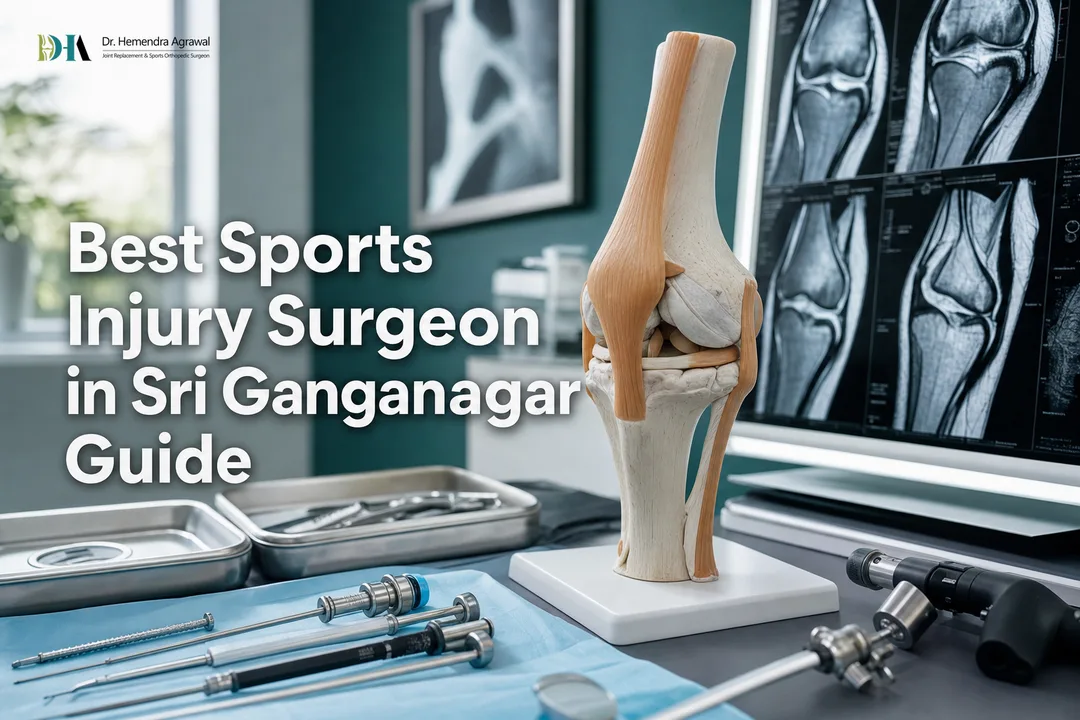
If you are searching for the Best Sports Injury Surgeon in Sri Ganganagar, it helps to know what “good” looks like in real life. In this guide, I will also explain how an orthopedic surgeon in jaipur like Dr. Hemendra Agrawal plans accurate diagnosis, safe treatment, and a return to sport that protects your joint for the long term.
What “Best” Means in Sports Injury Care
First, sports injuries are not only about pain. They often involve unstable joints, reduced confidence, and poor movement patterns that can trigger repeat injuries. Therefore, “best” usually means a surgeon who treats both the damaged structure and the reason it failed.
Importantly, the right plan depends on your sport, age, timing, and goals. For example, a footballer with an ACL tear needs a different path than a walker with a meniscus injury. As a result, a good surgeon avoids one-size-fits-all decisions.
Common Injuries Athletes See in Clinic
In practice, we most often see knee ligament tears, meniscus injuries, shoulder instability, ankle sprains, and muscle-tendon strains. Meanwhile, weekend athletes frequently arrive with pain that started as “minor” and then lingered for weeks.
Notably, the same injury label can hide different problems. For instance, “knee pain” may come from cartilage wear, patellar tracking, a meniscus tear, or a ligament injury. Because of this, imaging only helps after a focused clinical exam.
Red Flags That Need Prompt Orthopedic Review
Seek urgent evaluation if you hear a “pop,” cannot bear weight, notice rapid swelling, or feel the joint “giving way.” Similarly, numbness, deformity, or severe night pain needs prompt attention. In addition, repeated dislocations should never be ignored.
How an orthopedic surgeon in jaipur Assesses Sports Injuries
A strong assessment starts with a detailed history and sport-specific exam. Next, your surgeon checks alignment, range of motion, strength, swelling, and stability. Then they match your symptoms with special tests for ligaments, cartilage, and tendons.
From a clinician’s perspective, I have seen many athletes arrive with an MRI report but no clear rehab plan. However, imaging is only one piece of the puzzle. Therefore, the exam findings and your functional goals guide the final decision.
When needed, X-rays help rule out fractures or alignment issues. Likewise, MRI helps confirm soft-tissue injuries such as ACL, PCL, meniscus, or rotator cuff tears. Consequently, treatment becomes more precise and less guesswork-driven.
When Arthroscopy Makes Sense (And When It Does Not)
Arthroscopy uses small portals and a camera to treat certain joint problems with minimal tissue disruption. In many cases, it helps with meniscus tears, loose bodies, cartilage trimming, and ligament reconstructions. As a result, patients often return to daily activities sooner than with open surgery.
However, arthroscopy is not “better” for every ache. For example, diffuse arthritis pain may not improve with a scope alone. Therefore, a careful surgeon explains realistic outcomes and offers non-operative options when appropriate.
What to Expect From Modern Sports Injury Treatment
Today, sports injury care combines accurate diagnosis, minimally invasive methods, and structured rehabilitation. In addition, surgeons often coordinate with physiotherapists to restore strength and movement patterns. As a result, you do not just heal the tissue, you rebuild performance.
One key point is timing. If you rush back too early, swelling and weakness can persist. On the other hand, waiting too long with an unstable joint can increase cartilage damage. Therefore, the best plan balances safety with your recovery timeline.
Options: From Rehab to Ligament Reconstruction
Many injuries improve with guided physiotherapy, activity modification, and anti-inflammatory measures. For example, grade 1–2 ligament sprains often heal without surgery. Similarly, some meniscus tears respond well to rehab if the knee remains stable.
On the other hand, complete ligament ruptures in active patients may need reconstruction to restore stability. According to AAOS guidance on ACL injury treatment, treatment depends on instability, activity level, and symptoms, not the MRI alone. Therefore, your surgeon should discuss both operative and non-operative paths.
For knee ligament surgery, graft choice and fixation method matter. Notably, surgeons often use hamstring tendon or patellar tendon grafts for ACL reconstruction. In addition, a structured rehab protocol supports safe return to sport.
- Non-surgical care: rest, bracing when needed, physiotherapy, and load management
- Injection options: only for selected cases after evaluation
- Arthroscopic repair: meniscus repair or trimming, cartilage procedures
- Ligament reconstruction: ACL/PCL reconstruction for instability and high-demand activity
- Fracture and trauma care: urgent fixation and rehab planning
Importantly, outcomes vary based on injury severity, cartilage health, rehab quality, and medical factors like diabetes or smoking. Because of this, a trustworthy surgeon avoids guarantees and focuses on measurable milestones.
Choosing the Right Surgeon and Clinic Near Sri Ganganagar
Even if you live in Sri Ganganagar, you may consider options across Rajasthan for advanced arthroscopy and joint care. Therefore, look for a surgeon who explains your diagnosis clearly, shares imaging findings, and sets a staged recovery plan.
In addition, consider where the surgery happens and who supports rehab. A good team provides prehab, post-op physiotherapy guidance, and follow-ups that catch stiffness early. Consequently, you reduce the chance of setbacks.
If you are comparing providers, here are practical questions that help:
- First, what is the exact structure injured and how does it affect stability?
- Second, what are my non-surgical options and how long should we try them?
- Next, if surgery is needed, what technique will you use and why?
- Furthermore, what does the rehab timeline look like for my sport?
- Finally, what warning signs should make me return sooner than scheduled?
For deeper patient education and orthopedic resources, you can also explore Dr. Hemendra Agrawal’s orthopedic care website. Likewise, you can read about his clinical background on the about Dr. Hemendra Agrawal page.
When hospital support matters, it also helps to understand the systems used at large centers. For example, you can review orthopedic service overviews at Narayana Health. Moreover, internationally recognized guidance on sports and joint conditions is available from Mayo Clinic Orthopedic Surgery.
Dr. Hemendra Agrawal brings 15+ years of experience in arthroscopy, ligament reconstruction, joint replacement, fracture management, and trauma care. As a Senior Orthopedic Consultant at Narayana Hospital Jaipur and Founder-Director of Ortho K Link Clinic, he sees a wide mix of athletes and active adults. Therefore, his approach often combines minimally invasive techniques with personalized rehab planning.
If you typed Best Sports Injury Surgeon in Sri Ganganagar hoping for fast answers, focus on the basics: accurate diagnosis, an evidence-led plan, and disciplined rehabilitation. Similarly, if you need an orthopedic surgeon in jaipur for a second opinion on ACL, PCL, or arthroscopy, a clear consult can prevent wasted time and repeat injury.
Next Steps for a Safe Return to Sport
First, document your symptoms, injury date, and what movements trigger pain. Next, bring prior reports and imaging if you have them. Then your surgeon can confirm the diagnosis and map a realistic timeline.
In our clinical experience, athletes do best when they treat rehab like training. In addition, they track swelling, range of motion, and strength targets week by week. As a result, they return with better control, not just less pain.
Finally, keep your expectations grounded. Recovery speed depends on the injury, surgery type, and how steadily you progress. Therefore, choose a team that prioritizes long-term joint health over rushed milestones.
Book your consultation with Dr. Hemendra Agrawal today. Your joints deserve nothing less.
Contact Information
For expert consultation and personalized care, you can reach at:
📞 Phone: +91 92106 96045
📍 Narayana Hospital, Jaipur
SEC 28, Kumbha Marg, Pratap Nagar,
Sanganer, Sitapura Industrial Area, Sitapura,
Jaipur, Rajasthan – 302033
📍 Pratap Nagar Clinic
183/82, Rana Sanga Marg, Sector 18,
Pratap Nagar, Jaipur, Rajasthan – 302033