
Best Sports Injury Doctor In Sri Ganganagar Guide
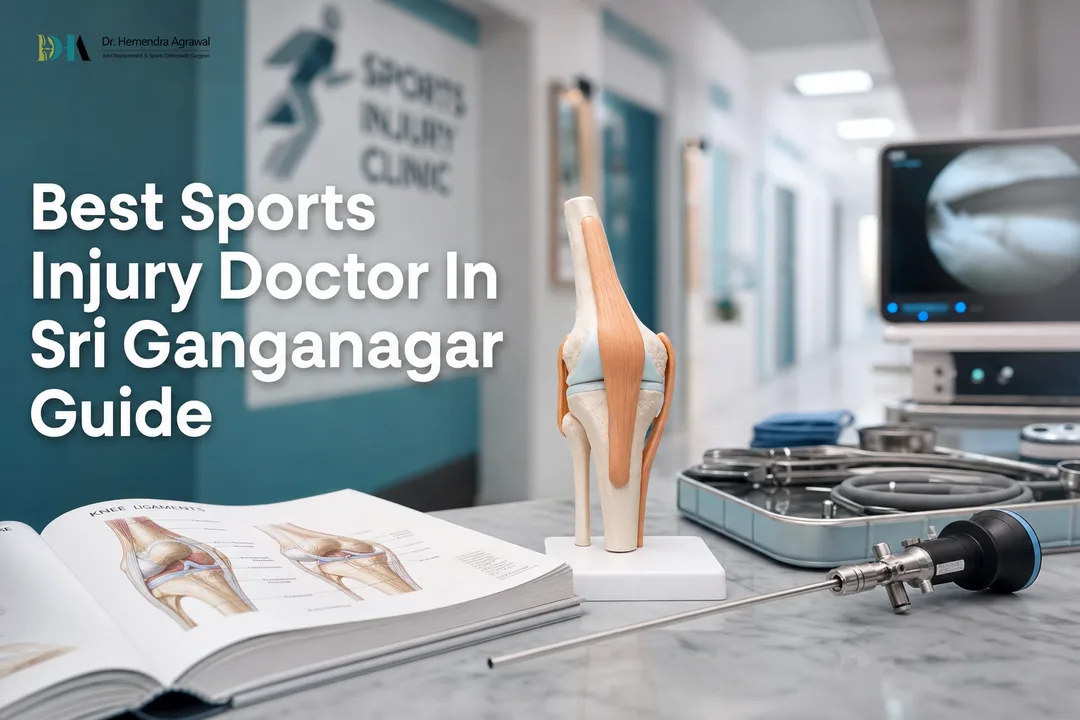
If you are searching for the Best Sports Injury Doctor In Sri Ganganagar, it helps to know what expert care should look like from day one. Many patients also widen their search to an orthopedic surgeon in jaipur when they want advanced arthroscopy, ligament reconstruction, and structured rehab. In this guide, you will learn how sports injuries get diagnosed, which treatments work best, and how to choose the right specialist for a safe return to sport.
Why Sports Injuries Need Specialist Care, Not Rest Alone
First, sports injuries rarely involve only “pain.” They often include swelling, instability, weakness, and loss of confidence in the joint. Because of that, the right plan must address the damaged tissue and the movement pattern that caused it.
Moreover, a rushed return can turn a small strain into a chronic problem. For example, playing through a meniscus tear can worsen locking and cartilage wear. Similarly, ignoring shoulder instability can lead to repeated dislocations.
Importantly, good sports injury care blends diagnosis, targeted treatment, and rehab milestones. That mix helps you heal while protecting performance goals.
Orthopedic Surgeon In Jaipur for Sports Injury Opinions
Second opinions matter when pain persists, the knee keeps giving way, or an MRI report feels confusing. In those cases, many athletes consult an orthopedic surgeon in jaipur for a detailed exam and treatment options. This approach can be useful for patients from nearby regions, including Sri Ganganagar, who want access to advanced arthroscopy and ligament reconstruction pathways.
Dr. Hemendra Agrawal is a senior orthopedic consultant at Narayana Hospital Jaipur and Founder and Director of Ortho K Link Clinic. He brings 15+ years of experience in arthroscopy, sports injury treatment, ligament reconstruction, fracture management, trauma care, and joint replacement surgery. You can also explore the clinic’s orthopedic care approach at Ortho K Link orthopedic services and patient resources.
Notably, sports injury treatment often starts with a careful hands-on exam. That step can reveal instability, catching, or tendon overload even when scans look “mild.” Therefore, a clinician who treats athletes daily will focus on function, not only reports.
What A Sports Injury Specialist Checks In The First Visit
First, expect a history that goes beyond “when did it hurt.” A good assessment covers the exact moment of injury, swelling timing, prior injuries, training load, and footwear or playing surface. Next, the doctor checks gait, alignment, and joint motion.
In addition, ligament testing matters. For example, ACL laxity tests and meniscus signs guide the next step. Moreover, your doctor should compare both sides for strength and stability.
Key Red Flags That Should Speed Up Your Appointment
- Sudden swelling within a few hours after a twist
- Knee giving way on stairs or while turning
- Locking or inability to fully straighten the knee
- Shoulder dislocation feeling or repeated slipping out
- Severe pain after a fall with deformity or numbness
However, not every painful joint needs surgery. Results vary based on tear type, age, sport demands, cartilage health, and rehab consistency. Therefore, a balanced plan matters more than a quick label.
Common Sports Injuries Seen In Rajasthan: Signs And Treatment
Sports injuries in and around Rajasthan often involve the knee, ankle, shoulder, and lower back. That pattern makes sense because these joints handle cutting, jumping, and contact. Consequently, early care can prevent repeated damage.
Below are common conditions and what treatment often involves. Importantly, the exact plan depends on exam findings and imaging, when needed.
ACL, PCL, Meniscus, And Cartilage Problems
ACL tears often happen with a sudden pivot, a pop, and fast swelling. PCL injuries can occur after a dashboard-type impact or a fall onto a bent knee. Meniscus tears may cause locking, catching, or joint-line pain.
In practice, we repeatedly see athletes who “feel fine” in a straight line but lose trust during turns. Because of this, a functional exam becomes as important as the MRI. Moreover, strength imbalance around the hip and core can overload the knee and slow recovery.
When rehab cannot restore stability, doctors may recommend arthroscopic surgery or ligament reconstruction. The American Academy of Orthopaedic Surgeons notes that ACL injury management depends on instability, associated injuries, and activity demands, and many athletes require a structured return-to-sport program (see AAOS guidance on ACL injuries).
Shoulder Injuries: Rotator Cuff, Labrum, And Instability
Overhead sports can strain the rotator cuff and irritate the bursa. Meanwhile, contact sports may cause labral tears or instability. Therefore, the exam often includes strength testing, impingement signs, and stability checks.
Treatment may include activity changes, targeted physiotherapy, and anti-inflammatory strategies. However, if the shoulder keeps slipping or pain persists, arthroscopy can repair labral tears and address structural problems.
For a patient-friendly overview of common shoulder conditions and care pathways, you can reference Cleveland Clinic Orthopaedics and Sports Medicine resources.
How Minimally Invasive Care And Rehab Support Faster Recovery
Minimally invasive orthopedic surgery, such as arthroscopic procedures, uses small incisions and a camera to treat injuries inside the joint. As a result, many patients experience less soft-tissue disruption and may regain motion sooner. Still, the true speed of recovery depends on biology and rehab quality.
In our day-to-day orthopedic work, a pattern we repeatedly see is that patients improve fastest when they follow a clear rehab roadmap. That roadmap includes swelling control, motion goals, strength targets, and sport-specific drills. In contrast, “rest until it feels okay” often leads to repeat pain.
Therefore, good care links the procedure to a rehabilitation plan. It also includes checkpoints for return to running, cutting, and contact. Moreover, it teaches injury-prevention habits to reduce re-tear risk.
Here is what a structured recovery plan often includes:
- Early phase: pain and swelling control, safe motion, and protected weight bearing when needed
- Strength phase: quad, hamstring, glute, and core strengthening with correct form
- Control phase: balance, landing mechanics, and change-of-direction training
- Sport phase: progressive drills, confidence rebuild, and fatigue management
- Return-to-play: objective tests plus clearance based on stability and performance
Importantly, timelines differ. For instance, ligament reconstruction usually needs months of progressive rehab. Therefore, choose a team that explains milestones clearly.
Choosing The Best Sports Injury Doctor In Sri Ganganagar
Choosing the right doctor is less about ads and more about process. First, look for someone who treats sports injuries regularly and explains options without pressure. Next, confirm that they coordinate rehab and track progress.
Additionally, ask how the doctor decides between physiotherapy, injections, arthroscopy, or reconstruction. A trustworthy specialist will share the trade-offs. They should also discuss risks, such as stiffness, infection, or re-injury, in plain language.
Finally, if you need advanced arthroscopy or complex ligament reconstruction, it can help to consult an orthopedic surgeon in jaipur who works in a high-volume center. Dr. Hemendra Agrawal serves as an orthopedic consultant at Narayana Hospital Jaipur, and you can learn more about his approach through Dr. Hemendra Agrawal’s orthopedic profile and experience.
As a practical checklist, consider these questions before you book:
- Will you perform a hands-on stability and movement exam?
- Do you treat ACL/PCL injuries, meniscus tears, and shoulder instability often?
- Which imaging do you actually need, and why?
- What rehab milestones must I meet before return to sport?
- Who will guide physiotherapy and progression after treatment?
In short, the best plan matches your sport, your joint health, and your goals. That is what protects long-term mobility.
Book your consultation with Dr. Hemendra Agrawal today. Your joints deserve nothing less.
Contact Information
For expert consultation and personalized care, you can reach at:
📞 Phone: +91 92106 96045
📍 Narayana Hospital, Jaipur
SEC 28, Kumbha Marg, Pratap Nagar,
Sanganer, Sitapura Industrial Area, Sitapura,
Jaipur, Rajasthan – 302033
📍 Pratap Nagar Clinic
183/82, Rana Sanga Marg, Sector 18,
Pratap Nagar, Jaipur, Rajasthan – 302033
As an orthopedic team focused on real-world recovery, we share practical guidance that patients can use beyond the clinic visit. If you are still deciding, start with an evaluation and a clear plan rather than guessing based on pain alone.
To close, if you want a careful opinion that weighs scans, function, and sport goals together, an orthopedic surgeon in jaipur can guide you toward the safest next step.